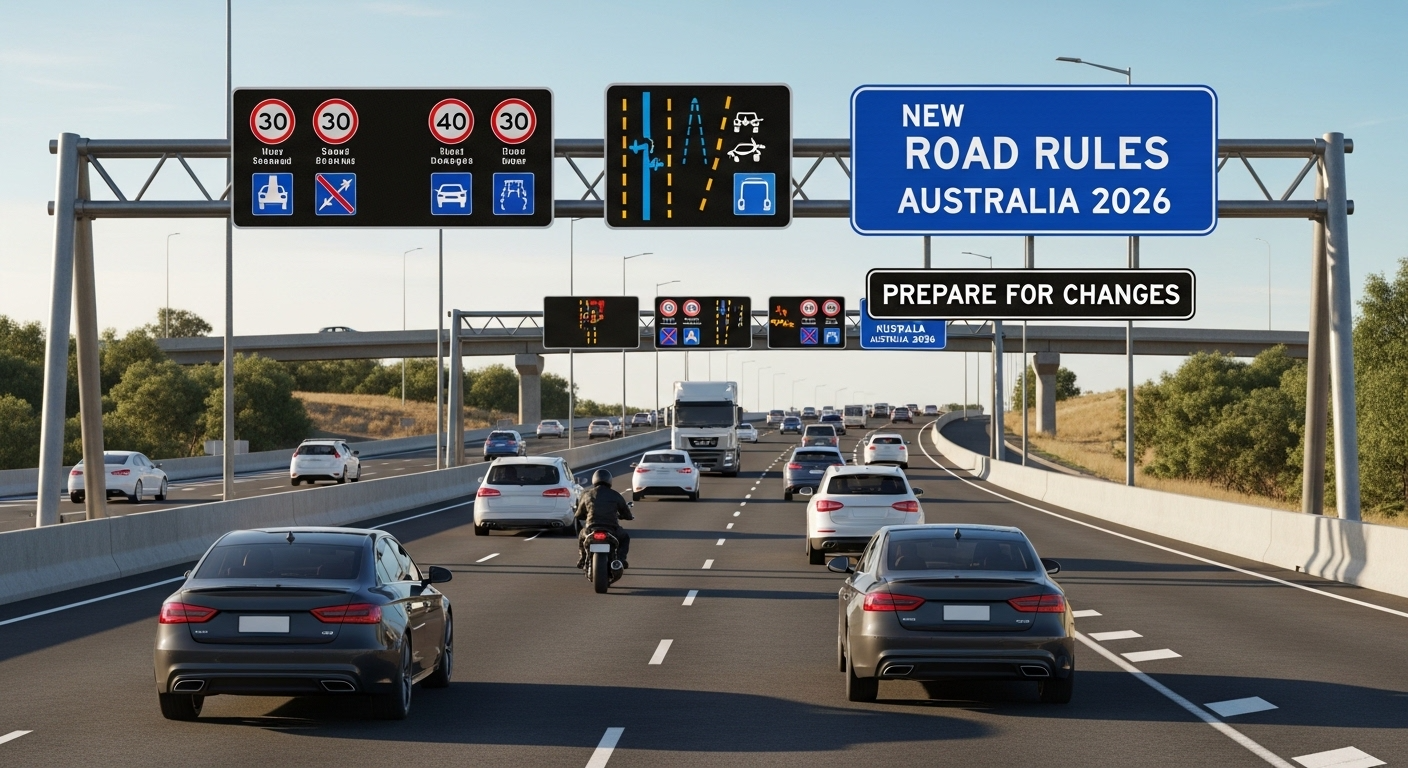
New Road Rules Take Effect Across Australia in 2026 as Drivers Prepare
Millions of Australian drivers are navigating a significantly changed road rules environment in 2026. A wide range of updated regulations is being introduced and enforced across states and territories, affecting everything from how licences are monitored to how penalties are applied for common violations. Authorities say the changes are about safety and modernising the system to reflect current road realities. For drivers, the practical message is simpler: what you could get away with before is increasingly being detected and penalised now, and the financial and licence consequences of non-compliance have grown substantially.
Understanding what has changed before you encounter a problem on the road is the only sensible approach.
Why Australia Is Updating Its Road Rules in 2026
Road laws in Australia are primarily controlled at the state and territory level, but 2026 is seeing a stronger push toward national alignment and consistent safety standards across jurisdictions. The motivation comes from several converging pressures that transport authorities can no longer ignore.
Road accident rates in certain regions have increased despite years of safety campaigns, and authorities are responding with harder enforcement rather than softer messaging. The growing number of older drivers on Australian roads has prompted specific changes to licence monitoring and medical fitness requirements. The rapid growth of electric vehicles, e-scooters, and other new mobility options has created gaps in existing regulations that are now being filled. And the expansion of digital enforcement technology has made it practical to monitor and penalise violations at a scale that was simply not possible even five years ago.
The combination of more rules, stricter enforcement, and smarter detection technology means that drivers who have been casually compliant for years need to pay more attention in 2026 than they have in the recent past.
The Major Changes Drivers Need to Know
While specific rules vary by state and territory, several significant updates are becoming common across the country and apply to the vast majority of Australian drivers.
Mobile phone penalties have increased significantly. Detection cameras capable of identifying drivers using handheld phones are now deployed widely across multiple states. These cameras operate automatically without requiring a police officer to be present, and the fine for being caught using a phone while driving has increased substantially. A single detected offence can now cost several hundred dollars and result in demerit points that threaten licence retention for drivers already carrying points from previous offences.
Speed, seatbelt, and phone cameras are being deployed more broadly. The network of automated detection cameras has expanded considerably in 2026, covering both metropolitan and regional roads that previously had limited enforcement presence. Drivers who adjusted their behavior only near known camera locations are now encountering cameras in places they did not expect.
Drink and drug driving penalties have become harsher. Roadside drug testing has expanded, and the penalties for both drink and drug driving offences have increased. Random breath testing operations are being conducted more frequently and in a wider range of locations.
Electric vehicle and e-scooter rules have been updated. With the rapid growth of both categories, specific rules around where these vehicles can travel, what safety equipment is required, and how they interact with existing road rules have been clarified or introduced in multiple states. Riders and drivers of these vehicles need to review the current rules in their specific state.
Licence conditions are being used more frequently than outright cancellations. Rather than removing licences entirely, authorities are increasingly imposing conditional licences that allow driving for specific purposes such as work or medical appointments while restricting other driving. This approach reflects a recognition that full cancellation can create hardship, but conditional licences come with strict compliance requirements and breaching those conditions carries serious consequences.
Licence and Medical Check Changes
One of the most significant areas of change in 2026 relates to licence renewals and medical fitness requirements. This affects all drivers but is particularly important for older drivers and those managing ongoing health conditions.
Medical reporting obligations are being more strictly enforced. Drivers with certain health conditions are required to report those conditions to their state transport authority and to provide medical clearance before continuing to drive. Under the tighter enforcement framework of 2026, failure to submit required medical documentation can result in a licence being considered invalid even if the driver was not aware of the requirement.
The consequences of driving without a valid licence or with an invalid licence extend beyond a fine. If a driver is involved in an accident while their licence is invalid due to an unmet medical condition requirement, insurance companies can reject the claim entirely, leaving the driver personally liable for all costs including third-party damages.
For older drivers specifically, the requirements around periodic medical reviews are now being tracked digitally and cross-referenced against licence records in ways that make non-compliance much more likely to be identified. The detailed coverage of this issue in our earlier article on mandatory medical checks for older drivers covers the specific requirements and how to ensure compliance.
Technology Is Transforming Enforcement
The most fundamental change to road rules enforcement in 2026 is not the rules themselves but the technology being used to detect and respond to violations. The era of enforcement that relied primarily on police officers physically observing violations is being supplemented by automated systems that monitor roads continuously.
AI-powered roadside and fixed cameras can now detect multiple types of violations including speed, mobile phone use, and seatbelt non-compliance in a single system. Automatic number plate recognition allows real-time checking of vehicle registration, licence status, and outstanding violations. Digital licence tracking means that a driver’s compliance status is accessible to enforcement officers instantly rather than requiring manual checking.
The practical implication for drivers is that the chance of a violation being detected has increased substantially even in the absence of visible police presence. Driving behaviors that previously carried a low practical risk of detection because few police were present now carry a much higher risk because cameras are present instead.
Who Is Most Affected by the 2026 Changes?
While the new rules apply to every driver on Australian roads, certain groups face higher exposure to the changes or stricter specific requirements.
Older drivers renewing licences face the most significant additional administrative requirements through the medical fitness checking process. As covered in detail in the mandatory medical checks article, the consequences of missing or delaying these checks have grown considerably.
Provisional and new drivers are subject to stricter demerit point thresholds that can result in licence loss from a smaller number of offences than apply to full licence holders. The expanded camera network means new drivers have less room for casual non-compliance than in previous years.
Drivers with medical conditions who have not reviewed their reporting obligations recently should do so immediately. The stricter enforcement of medical reporting requirements means that conditions that were previously managed informally now need to be properly documented and reported.
Rideshare and delivery drivers who spend significantly more time on the road than average drivers have proportionally higher exposure to the detection systems that have been expanded. A professional driver spending eight hours per day on the road faces far more camera encounters than someone driving to and from work.
Interstate drivers need to be particularly careful because road rules vary between states and what is legal in one state may not be legal in another. Speed limits, phone use rules, and specific road regulations are not identical across all jurisdictions.
What Officials and Experts Are Saying
Transport authorities across multiple states have been consistent in their messaging about the 2026 changes. Enforcement is becoming proactive rather than reactive. The goal is to detect and address dangerous driving behaviors before they result in accidents rather than only responding after collisions have occurred.
Road safety experts broadly support the direction of the changes while noting that driver education needs to keep pace with enforcement expansion. Drivers who do not know the rules cannot comply with them, which is why understanding what has changed is as important as the enforcement itself.
The shift toward conditional licences rather than outright bans is being seen by experts as a more nuanced approach that balances safety requirements with the genuine hardship that licence loss creates for people who need to drive for work or medical access.
Practical Steps for Every Driver
The actions required to stay compliant with the 2026 road rule changes are straightforward but do require deliberate attention.
Review the updated road rules for your state. Each state and territory transport authority has published information about the specific changes applying in their jurisdiction. Taking thirty minutes to read through the current rules is a small investment against the cost of an unexpected fine or licence issue.
Check your licence validity and any conditions attached to it. Log into your state transport authority’s online portal or contact them directly to confirm your licence is current and to identify any medical or review conditions attached to it that require action.
Understand your specific mobile phone obligations. The rules around hands-free use, voice activation, and complete prohibition vary slightly between states and the penalties for getting this wrong are now significant enough to warrant clarity.
Confirm your medical reporting requirements if you have any health conditions. If you have a condition that may be relevant to driving fitness, checking whether it needs to be reported to your transport authority before your next renewal is essential.
Stay cautious when crossing state borders. If you regularly drive between states, reviewing the specific rules that apply in each jurisdiction you travel through is worthwhile given the differences that exist between jurisdictions.
Frequently Asked Questions
Are the road rule changes the same in every state?
No. While there is movement toward greater national consistency, road rules remain primarily a state and territory responsibility and there are meaningful differences between jurisdictions. The most important thing is to check the specific rules that apply in the states where you drive regularly.
Can I be fined by a camera without being stopped by police?
Yes. The expanded network of automated detection cameras can issue infringement notices directly without any police officer being present at the scene. The notice is generated automatically from camera footage and mailed to the registered owner of the vehicle.
How do I find out if there are any conditions on my licence?
Contact your state transport authority directly or log into their online portal using your licence number. Any conditions or review requirements attached to your licence should be visible in your records. If you are unsure, asking directly is always the safest approach.
What happens if I drive while my licence is technically invalid due to a missed medical check?
Driving with an invalid licence is a serious offence regardless of the reason for the invalidity. You may face a fine, demerit points, and potential licence suspension. More significantly, any insurance claim arising from an accident while your licence was invalid may be rejected entirely, leaving you personally liable for all costs.
Do the new e-scooter rules apply to privately owned scooters as well as hire scooters?
Yes. The updated rules around e-scooters apply to all e-scooters regardless of whether they are privately owned or accessed through a hire scheme. The specific rules around where they can be ridden, maximum speeds, and helmet requirements vary by state and should be checked against your local jurisdiction’s current regulations.