Age Pension Changes March 2026: What Every Australian Retiree Must Know Right Now
If you are receiving the Age Pension or planning to apply soon, March 2026 brings changes you cannot afford to ignore. Services Australia has updated several key rules around eligibility, payment rates, and income assessments, and thousands of retirees are already asking what this means for their fortnightly payments.
The short answer is this: if your details are current and your financial situation falls within the updated thresholds, your payments will continue and may even increase slightly through indexation. If your details are outdated or your assets and income have changed, you could be receiving less than you are entitled to, or more than you should be, which can create a debt situation later.
This is not the time to assume everything is fine without checking.
What Has Actually Changed in March 2026?
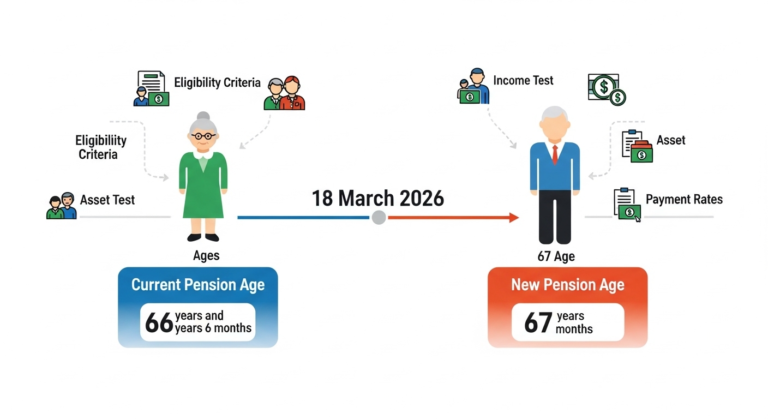
The government has updated the income and asset test thresholds that determine Age Pension eligibility and payment rates. These thresholds are reviewed regularly but the March 2026 adjustments are drawing more attention than usual because they coincide with broader cost of living pressures and stricter compliance monitoring being rolled out across the Centrelink system.
The income free area is the amount you can earn before your pension starts to reduce. This has been adjusted and checking where your income sits relative to the new figure is essential.
The asset thresholds that determine whether you qualify for a full pension, part pension, or no pension at all have also been revised. For homeowners and non-homeowners the thresholds differ, and the updated figures may affect people who were previously just within the qualifying range.
Deeming rates, which determine how much income Centrelink assumes your financial assets are generating regardless of what they actually earn, remain a point of frustration for many retirees in a higher interest rate environment. These are being reviewed but no significant change has been confirmed for March.
Who Is Most Likely to Be Affected?
Retirees who own investment properties, shares, or managed funds outside of superannuation are most likely to feel the impact of the updated asset assessments. The value of these assets is reviewed regularly and rising property and share prices over recent years mean some retirees may now sit above thresholds they were comfortably below when they last had their situation formally assessed.
Self-funded retirees who receive a part pension should pay particular attention. The part pension is the most sensitive to small changes in assets and income, and the tapering effect means that modest changes in your financial situation can have a disproportionate impact on your payment amount.
Retirees who have recently received an inheritance, sold a property, or experienced a significant change in superannuation balance also need to update their details immediately if they have not already done so.
What You Should Do This Week
Log into your MyGov account and review your current Centrelink details. Check that your income, assets, bank accounts, superannuation balance, and living situation are all accurately recorded. If anything has changed since your last update, correct it now.
If you are unsure how the updated thresholds apply to your specific situation, Services Australia offers free financial information sessions for Age Pension recipients. Retirement planning specialists can also help you understand how your assets and income interact with the current rules.
The ten minutes you spend checking your details now could protect thousands of dollars in annual pension income.
Frequently Asked Questions
Do I need to reapply for the Age Pension because of the March 2026 changes?
No. Existing recipients do not need to reapply. However, you do need to ensure your details are current so the correct updated rate is applied to your payments.
Will my pension automatically increase with the March indexation?
Yes, indexation is applied automatically. But the rate applied depends on your recorded circumstances, so outdated details can result in an incorrect adjustment.
What happens if my assets now exceed the new thresholds?
Your payment may be reduced or suspended. Services Australia will notify you if a reassessment affects your payment, but proactively checking your situation is safer than waiting for a notice.
Can I get help understanding how the changes affect me personally?
Yes. Services Australia financial information officers provide free guidance, and licensed financial advisers specializing in retirement can provide personalized advice.