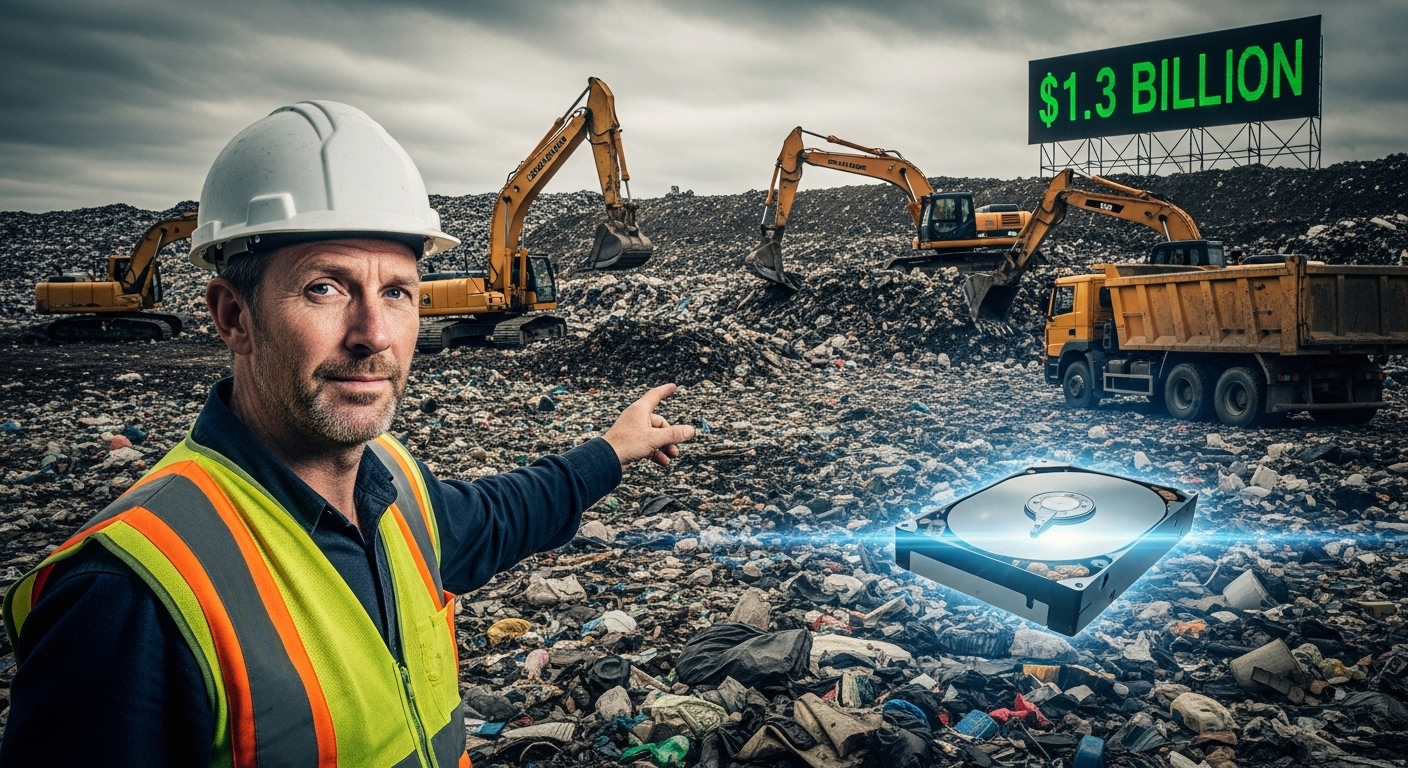
Man Who Threw Away 8,000 Bitcoins Worth $1.3 Billion Finally Gets His Shot at Recovery
For 12 years, James Howells has lived with one of the most expensive mistakes in modern history. A single careless moment during a desk cleanup sent a hard drive containing 8,000 bitcoins straight into a Welsh landfill.
Today those bitcoins are worth approximately $1.3 billion Australian dollars. And for the first time, an upcoming TV series is giving him a real shot at getting them back.
The Mistake That Started It All
James Howells was tidying his workspace in Newport, Wales, when he grabbed the wrong hard drive. He had two identical-looking drives and accidentally threw away the one containing his entire bitcoin fortune.
At the time those coins were worth around $1,000 total. Nobody imagined that one small mistake would define the next decade of his life.
How the Value Exploded Over Time
When Howells first realised his error, bitcoin was still considered a fringe experiment by most people. The council dismissed his request to search the landfill almost immediately.
Then bitcoin hit $20,000 in 2017. Then $60,000 in 2021. Every price surge turned his loss into something harder to ignore.
Why the Council Kept Saying No
Newport City Council refused every request Howells made for over a decade. Their position was consistent: the safety risks, environmental concerns, and excavation costs made any search completely out of the question.
The landfill covers 14 hectares and the drive is buried under years of compressed waste. Methane gas, corrosion risks, and strict environmental regulations all made digging seem impossible.
The Technical Challenge of Finding a Single Hard Drive
This is not a simple dig and search operation. Howells assembled a team of data recovery experts, robotics specialists, and environmental engineers to design a credible recovery plan.
The proposal involves AI-powered sorting systems and ground-penetrating radar to locate the drive without tearing the entire site apart. Estimated costs for the full operation run into the tens of millions.
How a TV Series Changed Everything
For years the council treated Howells like a persistent nuisance. That changed when an international streaming production came to Newport with cameras, crew, and global attention attached.
Suddenly the conversation shifted. A TV series brings media coverage, tourism potential, and public scrutiny that one determined man simply cannot generate alone.
What the Series Will Actually Show
The upcoming documentary will follow every stage of the bitcoin landfill search in real time. Viewers will watch engineers debate feasibility, environmental scientists assess risks, and Howells navigate tense negotiations with local authorities.
It is part treasure hunt, part technology showcase, and part human drama. The world will be watching as he either recovers his fortune or confronts the possibility it is gone forever.
What Recovery Would Mean Beyond the Money
If Howells succeeds, the implications go well beyond his personal windfall. The operation could establish entirely new protocols for digital asset recovery around the world.
It would also demonstrate advanced techniques for selective landfill excavation, potentially changing how waste management and resource recovery are handled globally. Newport itself could become permanently associated with the most expensive treasure hunt in history.
The Real Odds of Getting the Data Back
Data recovery specialists estimate a 50 to 80 percent chance that the drive’s data could still be retrieved if the hardware is located. The key unknown is how well the drive has been preserved under tons of compressed rubbish over 12 years.
Corrosion remains the biggest threat. But modern forensic data recovery techniques have succeeded in far more damaged situations than most people would expect.
Why This Story Matters for Crypto Investors
The Howells case is not unique in the cryptocurrency world. Experts estimate that up to 20 percent of all existing bitcoins are permanently lost due to forgotten passwords, discarded hardware, and similar accidents.
As bitcoin values continue to climb, those lost coins represent staggering sums sitting in digital limbo. The outcome of this search could reshape how the industry thinks about asset security and recovery.
Key Points
James Howells accidentally threw away a hard drive containing 8,000 bitcoins during a desk cleanup in 2013.
The lost bitcoins are currently valued at approximately $1.3 billion Australian dollars based on current market prices.
Newport City Council refused every recovery request for over 12 years citing safety, environmental, and cost concerns.
An upcoming international TV series has shifted the council’s position by bringing global media attention to Newport.
The recovery plan uses AI sorting systems and ground-penetrating radar rather than basic excavation methods.
Data recovery experts estimate a 50 to 80 percent chance the drive’s data could still be retrieved if found.
Up to 20 percent of all existing bitcoins are believed to be permanently lost due to similar accidents worldwide.
Success would establish new global protocols for digital asset recovery and selective landfill excavation techniques.
Frequently Asked Questions
How much are James Howells’ lost bitcoins worth right now? The 8,000 bitcoins are currently worth approximately $1.3 billion Australian dollars, though that figure moves with bitcoin’s market price daily.
Why did Newport City Council refuse for so long? The council cited serious safety concerns, strict environmental regulations, and the enormous cost and complexity of excavating an active working landfill as their reasons for refusal.
What are the actual chances the hard drive still works? Data recovery specialists estimate a 50 to 80 percent chance of successful retrieval depending on how well the drive has been preserved beneath years of compressed waste and moisture.
How is the TV series helping his case? The production brings international media attention, potential funding, and significant public pressure that has already begun shifting the council’s previously firm position against any search.
Could other people have lost valuable bitcoins the same way? Yes. Experts estimate that up to 20 percent of all bitcoin in existence has been permanently lost through forgotten passwords, discarded drives, and similar accidents over the years.
What happens if the drive is found but the data cannot be recovered? Howells would remain without his fortune, but the operation would still generate valuable insights for future digital asset recovery efforts and advance techniques for targeted landfill excavation globally.
Is this the most valuable lost item in history? In monetary terms it is among the most significant. Few lost objects anywhere in the world carry a verified value anywhere near $1.3 billion dollars tied to a single recoverable physical item.
What technology is being used to find the drive? The recovery team plans to use ground-penetrating radar, AI-powered waste sorting systems, robotic diggers with methane monitoring, and specialist forensic data recovery equipment in clean-room conditions.
Conclusion
James Howells waited 12 years for someone to take his story seriously enough to act. An upcoming TV series has done what persistence alone could not, turning a long-running obsession into a genuine international moment.
Whether he recovers his $1.3 billion fortune or walks away empty-handed, the operation will leave a lasting mark on how the world thinks about lost digital assets and what recovery actually looks like in practice.
For bitcoin investors and crypto enthusiasts everywhere, this is the search that could change everything.
Read more: https://wizemind.com.au/