A Polar Vortex Anomaly Is Approaching, and Forecasters Say the Speed and Configuration of This System Challenge Decades of Winter Climate Data
The sky over the lake turned the color of old steel just after noon, the kind of gray that swallows distance and sound. You could feel it more than see it at first: an almost electric tightness in the air, a sudden hush that made the far-off highway seem miles further away. On the shoreline, thin panes of new ice rattled softly against each other with every faint ripple, like a pocket full of loose coins.
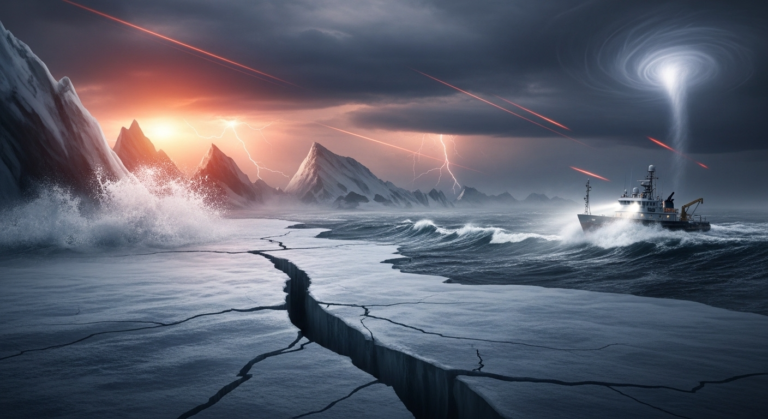
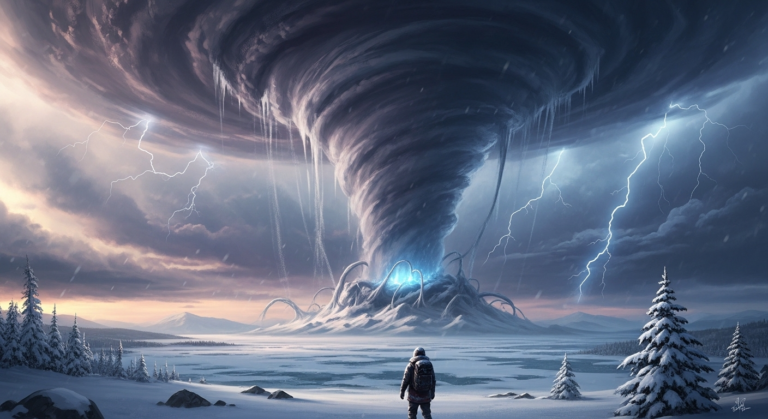
Somewhere out over the white horizon, the atmosphere itself was rearranging. A polar vortex anomaly, those four words that sound more like science fiction than weather forecast, was spinning into place faster and stranger than anything winter climatologists had mapped in decades.
When Winter Stops Playing by the Old Rules
By the time the warning reached local radio stations, the sky had already begun to tilt toward something uncanny. The announcer’s voice was too calm for the words he was reading: “Anomalous polar vortex configuration. Unusual speed of descent. Impacts uncertain.”
We are used to winter having a certain logic. Cold arrives, storms follow patterns, polar air stays mostly where it belongs, circling the Arctic in a tight, frigid crown. Most of us, consciously or not, live by those patterns. Generations of farmers, city planners, and power grid designers have built their assumptions on those quiet, dependable rules written into the climate record.
This time, forecasters were warning that those rules might not apply.
In weather offices across the hemisphere, eyes were glued to swirling bands of color on computer screens, long looping streamers of frigid air stretching and twisting in ways that made veteran meteorologists shift uncomfortably in their chairs. The polar vortex had been jolted, fractured, and accelerated. The speed and shape of its southward dive did not align with the statistical memory of winter stored in data archives going back many decades.
The Anomaly Above Our Heads
High above the clouds we see from our bedroom windows, the atmosphere becomes layered like an invisible cake. Planes slice through the lower part, the troposphere, where our day-to-day weather lives. Above that lies the stratosphere, thinner and stranger, where the polar vortex spins: a pool of intensely cold air wrapped by fierce winds racing in a near-circle around the pole.
On an ordinary winter, this vortex behaves like a stern but predictable gatekeeper, trapping much of the Arctic cold in place. Decades of observations have engraved that stability into climate records. The numbers tell a story of familiar oscillations, known extremes, and manageable risks.
Now imagine looking at the latest atmospheric scans and seeing that familiar round structure stretched into a lopsided, elongated shape, almost like a figure being pulled off balance. Wind speeds along certain bands spike beyond what algorithms expect. The vortex dips, its boundaries warping, funneling toward mid-latitudes in a hurried slide rather than a slow sag.
One senior scientist described it this way: “It is as if the orchestra is still playing the same song, winter, but the rhythm has become erratic and some instruments are suddenly too loud.” For modelers, this is both fascinating and unsettling. Their tools are built on history. A configuration that shrugs off decades of that training is like a new language suddenly spoken in the middle of a familiar conversation.
The Quiet Data Revolt
Deep in climate archives, winter is stored as numbers: temperatures, pressures, wind profiles, storm tracks. For some regions these records stretch back more than a century. All of it is used to set expectations: your one-in-fifty-year event, your hundred-year storm, your reasonable design limits.
But the air above us does not read those records.
As the Arctic warms faster than the rest of the planet, the balance that shaped those long-term patterns has been shifting. Sea ice retreats sooner and returns later. Open water absorbs more sunlight. Temperature contrasts blur at the edges. Some scientists have argued for years that this would play havoc with the jet stream and, by extension, the polar vortex.
This anomaly is not a neat proof of any single theory. Instead, it is more like a loud clearing of the throat from the climate system itself. The speed of the vortex’s descent, the jaggedness of its shape, and the way cold air reaches into regions that typically shiver only briefly are pushing right up against, and in some ways beyond, the envelope defined by past winters.
On the Ground, Waiting for a Sky We Do Not Recognize
Ahead of the anomaly’s arrival, the world on the ground moves in ordinary ways, unaware and yet, somehow, a little watchful. In a small town near a northern lake, a woman stacks an extra layer of wood beside her back door just in case. Her dog hesitates on the doorstep, sniffing the air as if the future had a scent.
At the bus stop in a distant city, a teenage boy checks his phone. Another notification about the “unusual Arctic surge.” He scrolls past the charts and animations. The numbers do not mean much to him, but the talk of “record-challenging wind chills” does. He tugs his jacket tighter. His little sister, beside him, sticks out her tongue to catch the first stray flakes.
Inside a regional power grid control room, the atmosphere is more tense. Operators murmur over demand projections, their screens filled with jagged lines and bold red highlights. They know from bitter experience that cascading cold stresses both aging equipment and human endurance. For them, the anomaly is practical and immediate. Extra crews on standby. Fuel reserves checked twice. Calls to hospitals, emergency management offices, and transit authorities.
Behind the often calm language of meteorological bulletins lies a simple, pressing question: How do you prepare for something your infrastructure was never fully designed to meet?
The Strange Geometry of Cold
From space, if you could watch a time-lapse of the days ahead, you would see it: a bloom of icy air curling downward from the pole, then stretching like spilled ink. It does not cover everything equally. It snakes and branches, some regions gripped by vicious cold while others sit oddly mild, watching the drama unfold on their screens.
The cold that comes with these events is not just about low temperature. It is about the way wind, humidity, and duration conspire to shape human experience. A still, clear minus-10-degree night can feel almost peaceful. But throw in a screaming wind and an air mass plunging to minus-30, and the cold becomes architectural. It builds walls between people and the world outside.
On city streets, noise changes texture. Tires on ice sound thinner. Voices vanish quicker into the air. The anomaly writes itself into every sensory detail: the way nostrils sting on the first breath outside, the way metal seems to bite back when touched.
Yet it is uneven. A coastal town might watch the thermometer flirt with freezing rain instead, heavy glassy coatings that drag branches down and snap power lines. Another region might be spared the worst chill but hammered by snowfall as the altered jet stream steers storms along an unusual track. Weather maps, for a while, will look slightly wrong to anyone who has studied them for decades.
What the Numbers Whisper Beneath the Howl
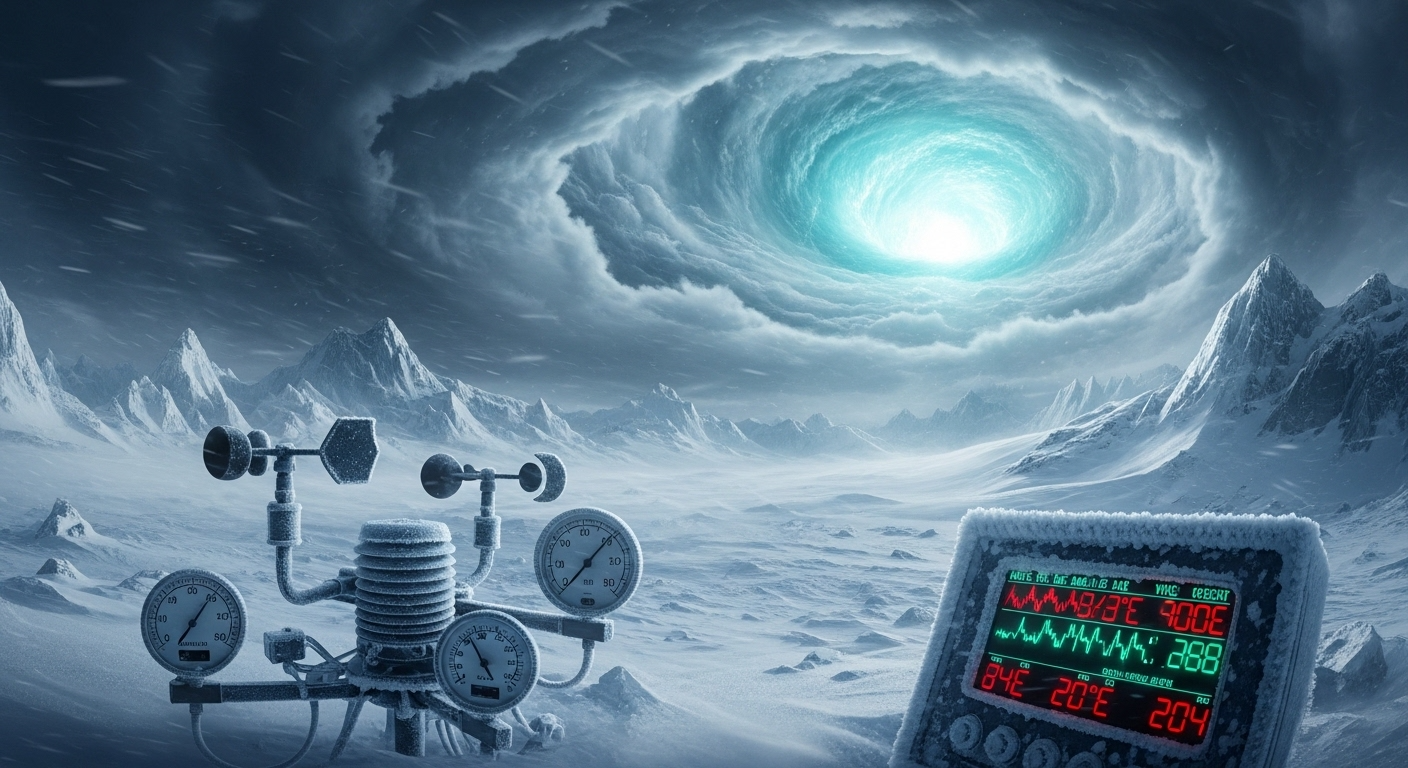
Even as people brace for immediate impacts, a quieter work unfolds behind the scenes. Every temperature reading, every pressure measurement, every satellite snapshot of the upper atmosphere is captured and stored. Somewhere in a windowless room humming with servers, this winter is being written into the planetary record.
Months later, scientists will return to it. They will dissect the anomaly frame by frame: the first hints of stratospheric disruption, the precise angle at which the jet stream buckled, the timing of the vortex’s accelerated descent. Some questions will hover like frost on a window.
Was this event made more likely by the background warming of the Arctic? Did sea ice patterns precondition the atmosphere for this kind of vortex behavior? How far outside the old statistical envelope did this event truly fall?
Answers will come slowly, wrapped in caveats and percentages. Still, one thing is already clear to many in the field: the old decades of winter climate data that once felt almost like a contract now read more like a first draft.
| Feature | Typical Winter Polar Vortex | Current Anomalous Event |
|---|---|---|
| Shape | Roughly circular, centered over Arctic | Distorted and elongated, dipping into mid-latitudes |
| Speed of Southward Shift | Gradual, over several weeks | Rapid, compressed into days |
| Forecast Confidence | High, based on historical patterns | Lower, limited historical parallels |
| Impacted Areas | Mostly high and some mid-latitudes | Broader reach, usually mild regions at risk |
| Fit With Past Data | Well within known variability | At or beyond edges of recorded variability |
Living Through the Anomaly
When the leading edge finally arrives, it may not feel like a cinematic switch being flipped. Instead it is a steady tightening. Temperatures slide, then plunge. Wind rakes down empty streets, swallowing the last of the autumn’s forgotten leaves.
On a farm a few hours from the city, a man checks on his cattle in the dark. Their breath billows in the barn, huge white ghosts flickering in the beam of his headlamp. He has seen winters his whole life, but the forecasts this week made him pour extra straw, double-check water heaters, and call his neighbor about sharing backup generator power if things get rough.
In a tower apartment, a parent tapes blankets over thin windows and boils water for tea, watching the building opposite disappear behind a curtain of swirling snow. She thinks about the phrase from the news: “challenging decades of winter climate data,” and wonders what that really means for the old pipes in the walls, the elevator cables, the bus routes to the hospital where she works.
The anomaly becomes personal in all these small ways. It is in the decision to cancel school, the sudden shortage of road salt at the hardware store, the quiet at the park where the usual crowd of dog walkers has thinned to a stubborn few.
Yet there are moments of stark beauty too. Under a hard, transparent sky, ice crystals dance in the air, catching moonlight and streetlight alike in tiny sparks. The world seems held in a pause, every sound softened, every motion slowed. The anomaly may be a symptom of deeper planetary unease, but standing alone under that sky, you can feel something else as well: the raw, indifferent power of a world far larger than any of our spreadsheets.
What This Winter Is Telling Us
When the worst of it finally lifts, there will be cleanup. Broken branches, burst pipes, icy ruts slowly surrendering to slush. The memory of this winter will settle into stories told across kitchen tables: “Do you remember that year when the cold came out of nowhere?”
Scientists will remember it differently. For them this will be a data-rich chapter in a much larger narrative: a climate system straining against old definitions of normal, extreme, and unlikely. The polar vortex anomaly will be cross-referenced with sea-surface temperatures, snow cover, and atmospheric composition. It will be weighed against model projections and long-term trends.
One event does not rewrite the climate story on its own. But it can underline, in bold ink, the themes already emerging on the page. A faster-warming Arctic. More contorted jet streams. Weather patterns that linger too long or snap too quickly from one extreme to another.
Each anomaly is both a messenger and a question: if this is possible now, what might be possible in another decade?
For the rest of us, the message may be simpler but no less urgent. Our assumptions about the boundaries of winter, how cold it can get, how far south that cold can reach, how often we can expect such extremes, are shifting. The infrastructure we built to carry us through the season will need to stretch with that shift. So will our imaginations.
Standing by that lake again, weeks later, with the ice now thicker and the air gentler, it is tempting to file it all away as just another strange winter episode. But if you listen closely to the scientists poring over their models, to the archives of data whispering of new patterns, to the old-timers muttering that this is not how it used to be, you hear the same refrain. Winter is still winter. The sky still turns steel-gray, the ice still sings. But the tempo is changing, and the dance of cold and warmth that shapes our lives is becoming less predictable.
Frequently Asked Questions
What exactly is the polar vortex?
The polar vortex is a large-scale circulation of very cold air high in the atmosphere, centered near the poles. It is surrounded by strong winds that usually keep that cold air contained in the Arctic regions during winter.
Why is this polar vortex event considered an anomaly?
Forecasters are seeing an unusual combination of factors. The vortex’s shape is more distorted than normal, it is shifting southward more rapidly, and its configuration does not match common patterns observed in many decades of winter climate data.
Does a polar vortex anomaly prove climate change?
No single event can prove climate change. However, anomalies like this are studied to see how they fit into long-term trends. A warming Arctic and changing jet stream behavior may be making certain unusual vortex events more likely or more intense.
Which regions are most at risk during this kind of event?
Mid-latitude regions that normally experience moderate winters can see intense cold snaps, severe wind chills, and disruptive storms when distorted vortex lobes push south. Exact locations affected vary with each event.
How can people prepare for a polar vortex related cold wave?
Practical steps include weatherizing your home, having backup heat sources if possible, stocking essential supplies, protecting pipes and pets, checking on vulnerable neighbors, and staying updated with local forecasts and emergency advisories.
Will these kinds of anomalies become more common?
Research is ongoing. Some studies suggest that as the Arctic warms, disruptions to the polar vortex and jet stream may become more frequent or behave differently. Others caution that natural variability still plays a significant role. Scientists are using events like this to refine their understanding of what future winters may look like.