A Polar Vortex Disruption Is on the Way, and Its Magnitude Is Almost Unheard of in February
The cold arrives first as a feeling, long before the numbers show it. You sense it in the way the air stiffens against your skin, in how breath hangs a fraction longer before dissolving, in the uneasy quiet that falls over a city used to motion. Somewhere high above, in a place you will never stand and can barely imagine, the atmosphere is rearranging itself. Winds that usually race in disciplined circles are stumbling, slowing, and breaking apart.
Meteorologists have a name for this kind of stumble: a disruption of the polar vortex. This time, in the middle of February, when winter is supposed to be slowly loosening its grip, that disruption is shaping up to be almost unprecedented in its scale.
The Sky That Forgot Its Lines
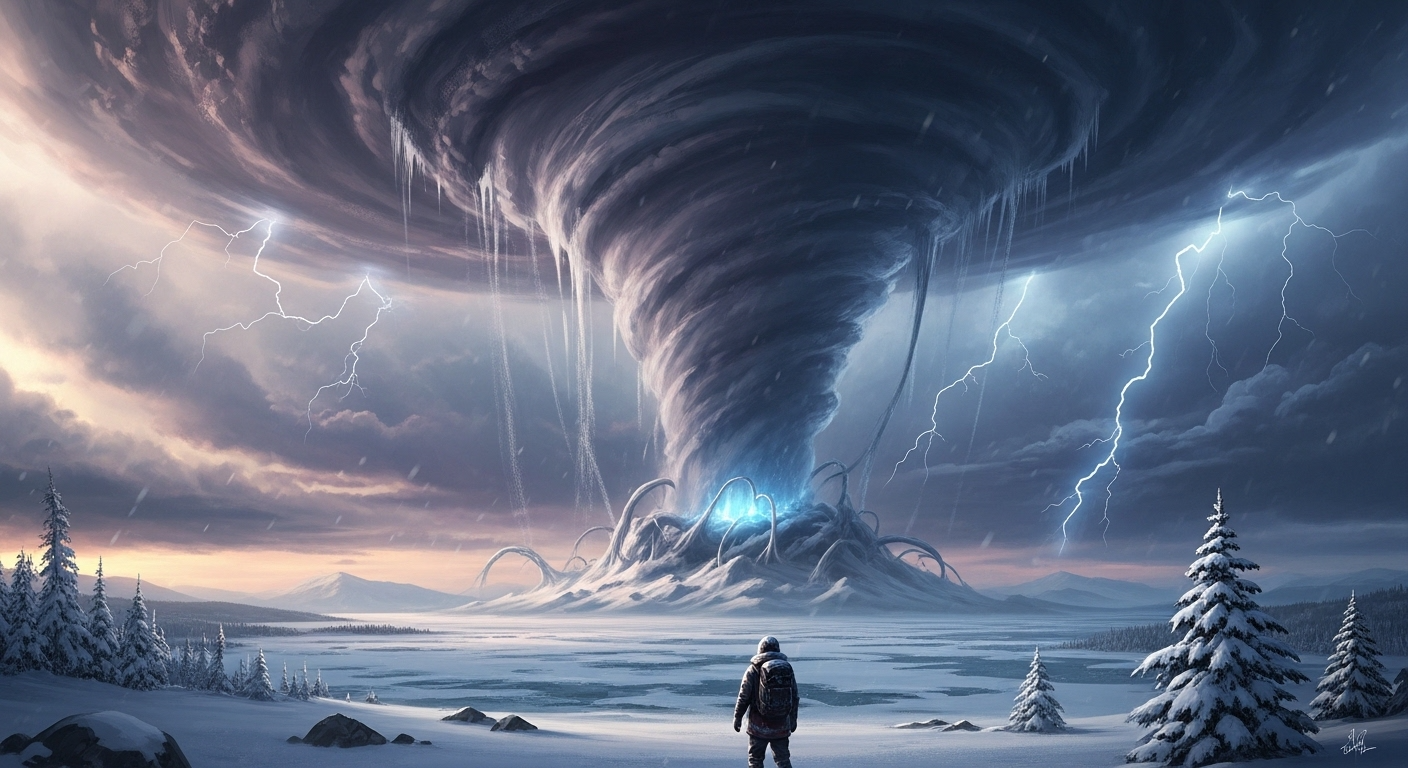
Picture the polar vortex as a colossal, invisible whirlpool of air locked over the Arctic, lurking more than ten miles above us in the stratosphere. In a normal winter, this vortex spins like a well-rehearsed dancer: a tight ring of brutal cold corralled near the pole by fierce winds screaming west to east at more than 100 miles an hour. It is, in a sense, winter’s operating system.
But now the script is slipping. High-altitude waves of air pushed upward by mountains, jet streams, and sprawling weather systems have been hammering at the vortex for weeks. Each wave is like a hand on the dancer’s shoulder, nudging it off balance. When enough of those nudges line up just right, the vortex does not just wobble. It cracks.
This February, those cracks are widening into something extraordinary. The winds at the core of the vortex are projected to weaken dramatically and potentially even reverse direction. Temperatures at the top of the stratosphere over the Arctic are expected to spike by 40 to 50 degrees Celsius above normal. Even there, where cold is the standard language, that is a hot scream of difference.
This kind of atmospheric upset has a technical name: a sudden stratospheric warming, or SSW. They happen on average every couple of winters. But what is brewing now stands out by its timing, its scale, and the sheer ferocity of the change unfolding above the pole. It is, quietly and invisibly, one of the most powerful weather events of the year.
When the Stratosphere Echoes Downward
If this drama stayed locked in the stratosphere, it would be a curiosity for scientists and little more. But the atmosphere is a stack of interconnected layers, not separate worlds. What happens at the top eventually echoes downward, first through subtle shifts in winds, then in the position of the jet stream, and finally in the patterns of cold and warmth that shape your daily life.
That echo does not arrive overnight. It can take one to three weeks for the full consequences of a powerful polar vortex disruption to work their way down to the surface weather we actually experience. In that lag time, forecasters watch for telltale signs: the jet stream buckling into deeper waves, high-pressure domes strengthening in the Arctic, and tongues of cold air poised to spill southward.
What makes this February disturbance so striking is how forcefully the models show that echo spreading. The vortex, which often remains at least somewhat coherent even during weaker disruptions, is expected to become seriously distorted and possibly split into separate lobes. Imagine that whirlpool shattering into two or more smaller swirls, each dragging its own pool of frigid air with it. Those pools do not always head for the same places. Sometimes they soak Siberia, sometimes North America, sometimes Europe. But the more broken the vortex, the greater the odds that one of those lobes parks itself in mid-latitudes, where billions of people live.
Already, long-range forecasting tools are hinting at a reshaped late-winter pattern: blocking highs anchoring over Greenland or the Arctic, storm tracks kinked into new paths, and the possibility of cold blasts where just days before, early spring seemed to be arriving. This is not a promise of a specific snowstorm for any one place. It is a loaded die rolled again and again over the weeks to come.
The Numbers That Make Meteorologists Stop Mid-Sentence
In a world awash with superlatives, “almost unheard of” can sound like just another headline. But in this case, the numbers genuinely stop the professionals.
Stratospheric winds that typically roar along at more than 40 meters per second are forecast to crash close to zero and possibly flip to easterly. Temperature anomalies over the Arctic stratosphere are modeled to soar to historic highs for February, shattering decades of climatology. For many datasets that meteorologists rely on, these projected spikes sit at the extreme end of what has ever been recorded for this time of year.
And then there is the timing. Sudden stratospheric warmings are more common in December and January. By February, the atmosphere is usually starting its slow transition toward spring. Sunlight is creeping back into the Arctic. The vortex is often weakening by then anyway, but gradually. This is not a gentle fade-out. It is a dramatic, forced reboot of the system, coming late in the seasonal game.
| Feature | Typical February Polar Vortex | Current February Disruption |
|---|---|---|
| Core wind speed | Strong westerlies, often above 40 m/s | Near collapse, possible reversal to easterly |
| Stratospheric temperature anomaly | Slight warming or near normal | 40 to 50 degrees Celsius above normal |
| Vortex structure | Mostly circular, centered around pole | Highly distorted, possible split into lobes |
| Frequency in records | Moderate disruptions some winters | At or near record strength for February |
| Surface impact odds | Minor jet stream adjustment | Elevated risk of major pattern shift |
A Winter That Cannot Make Up Its Mind
For people on the ground, one of the strangest experiences during a major polar vortex disruption is how contradictory the weather can feel. While some regions brace for snow and ice, others experience a warm spell that feels almost indecent for late winter. The idea that a disrupted polar vortex brings cold everywhere is a myth. What it really does is shuffle the deck of who gets winter’s worst and who gets a strange springlike reprieve.
Imagine standing at a window in central Europe or the American Midwest in early March. Outside, a sudden northerly wind has scoured the sky crystal clean and the temperature is tumbling faster than makes sense for the calendar date. Bare trees etched in hard lines, snow swirling like salt blown from an invisible hand. That could be one face of this disruption, a classic late-season cold outbreak made more likely by the wobbling jet stream.
But flip the globe to the Arctic, or high-latitude Canada or Scandinavia, and the story may be the opposite. A stubborn high-pressure block could mean milder than normal conditions, with ice softening on river margins and thin sunlight reflecting off bare ground that should still be white.
One region is scraping ice from sidewalks. Another is turning off the heating early. Both are part of the same atmospheric upset, a reshuffling of the boundaries between cold and warm, set in motion by a drama taking place high above their shared sky.
How Forecasters Are Tracking an Invisible Upheaval
There is a quiet race playing out right now inside supercomputers around the world. Meteorological agencies are running global models repeatedly, each run starting from subtly different initial conditions. These are the ensemble forecasts, and together they form a probability map of the atmosphere’s future.
As this February disruption evolves, those ensembles are starting to converge on a picture of substantial change. The exact shape of it, where the cold pools will anchor and where storm tracks will re-aim, is still fluid. But the broader signal of a jet stream losing its tidy flow and diving into more sinuous curves is strengthening. That is the kind of setup that can bring heavy snowstorms to some continents while fueling intense rainfall or unusual warmth in others.
The message you may see in local forecasts over the coming days might sound understated: “Increased potential for late-season cold spells.” “Pattern change likely.” Behind those reserved phrases is the knowledge that the atmosphere is being rewritten from the top down, and that small deviations today can mean dramatically different lived experiences a few weeks from now.
Is Climate Change Making This Worse?
It is tempting to ask whether this massive February disruption is a sign of climate change. The honest answer lies in a careful middle ground. Sudden stratospheric warmings occurred long before humans began altering the climate. The atmosphere has always been capable of these flip-the-board events.
What is emerging from research is a more nuanced picture. Loss of Arctic sea ice, shifts in snow cover over Siberia, and changes in the temperature gradient between the equator and the pole can all influence the wave patterns that buffet the vortex. Some studies suggest that certain regions may now be more prone to prolonged cold outbreaks following SSWs, even as global average temperatures rise. Others caution that the data records are still relatively short and the mechanisms are complex.
What is clear from a human perspective is a sense of increasing atmospheric mood swings. Winters can flip from mild to brutally cold in the space of a week and back again. Communities that consider themselves temperate find themselves suddenly grappling with dangerous ice, overwhelmed power grids, and infrastructure never designed for extended freezing. Vulnerable people, those without stable housing, with precarious heating, or with medical conditions sensitive to cold, are left at the mercy of a system whose extremes feel less like once-in-a-lifetime events and more like here we go again.
What You Can Actually Do to Prepare
You cannot nudge the jet stream with a shovel or persuade the stratosphere to calm down. But you can pay attention to the unfolding story and prepare your own small corner of it.
In regions where late-season cold snaps grow more likely, treat the next few weeks with the same respect you gave mid-January, even if crocuses are starting to push through softened soil. Keep pipes insulated. Plan for the possibility of short-notice school closures or travel disruptions. Think about who in your circle might struggle most with a sudden drop in temperature.
Elsewhere, where the dice may roll toward unusual warmth or storminess, preparation looks different. Warmer than normal conditions can accelerate snowmelt and trigger flooding. The key is flexibility: understanding that the atmosphere is in flux and that forecasts may evolve quickly as the downward echo of the vortex disruption becomes clearer.
Step outside on a clear night during these weeks and look up. You will not see the vortex or the warm pulse tearing through the stratosphere. The sky will look as it always has, a quiet dome of stars. Yet above that stillness, the air is tumbling and reorganizing, breaking old patterns and testing new ones. We live inside that experiment whether we think about it or not. To know that it is happening is, in some small way, to be better equipped for whatever kind of winter encore arrives at your door.
Frequently Asked Questions
What exactly is the polar vortex?
The polar vortex is a large-scale circulation of very cold air high in the atmosphere, centered over the poles. In winter it becomes stronger and more defined over the Arctic, with powerful westerly winds encircling it. It is not a single storm but a persistent, swirling pool of cold air in the stratosphere.
What is a sudden stratospheric warming?
A sudden stratospheric warming is a rapid temperature increase in the stratosphere over the polar region, usually by tens of degrees Celsius in a matter of days. This warming weakens or disrupts the polar vortex, sometimes causing it to split. The disturbance can eventually influence weather patterns near the surface, especially in late winter.
Does a polar vortex disruption always mean extreme cold where I live?
No. A disrupted polar vortex increases the chances of cold air spilling south in some regions but not everywhere. Some areas may experience severe cold and snow while others see milder or stormier conditions. The effect depends on how the jet stream and pressure patterns shift over your specific region.
Why is this February disruption considered almost unheard of?
Because of its expected strength, timing, and scale. The projected warming in the stratosphere and the collapse of vortex winds are near record levels for February in many datasets. Such a strong event this late in the season is genuinely unusual.
Is climate change causing stronger polar vortex disruptions?
Current science suggests a complex relationship. Sudden stratospheric warmings occurred before human-driven climate change, and not every disruption can be linked to it directly. However, changes in Arctic sea ice and temperature gradients may be influencing how often and how strongly the vortex is disturbed. Research is ongoing and active debate continues among scientists.
What should individuals do to prepare?
Stay informed through local forecasts and treat late winter with the same caution you would mid-January during the weeks following a major vortex disruption. Winterize your home, review emergency supplies, plan for potential travel disruptions, and check on vulnerable friends or neighbors if severe conditions are expected in your area.