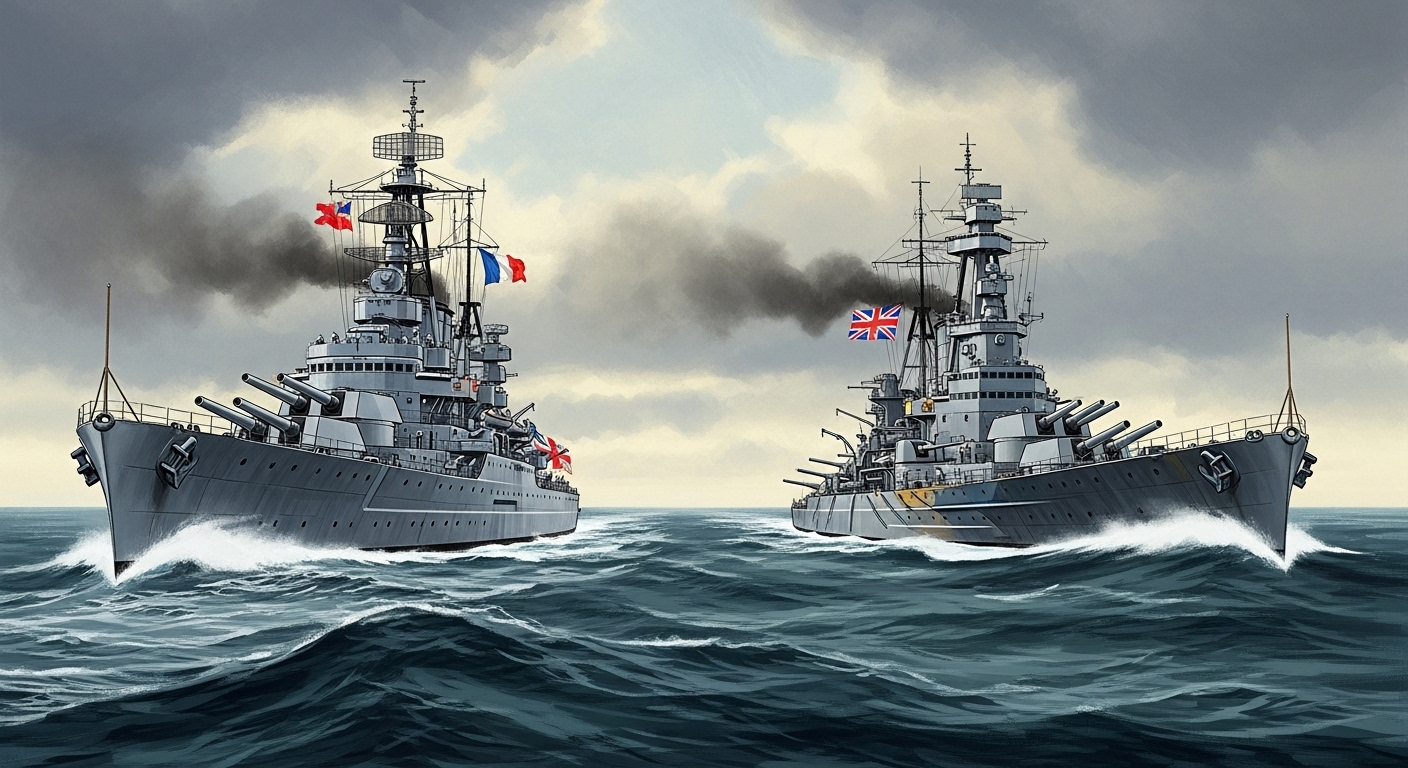
France Pulls Level With the Royal Navy: How the 5,200-Ton De Grasse Is Reshaping European Naval Power
A new chapter in one of history’s oldest military rivalries has just been written. France’s nuclear submarine De Grasse, launched in May 2025, is quietly shifting the balance of naval power in European waters in ways that defence analysts are still unpacking.
At 5,200 tons and 99 metres long, this Barracuda-class vessel is not just another ship launch. It represents a fundamental challenge to Britain’s long-standing dominance beneath the waves.
What Makes De Grasse Different
De Grasse is the fourth submarine in France’s Barracuda-class programme, designed to completely replace the ageing Rubis-class fleet. Around 2,500 people built it, including 800 subcontractors handling everything from advanced electronics to the nuclear reactor at its core.
That nuclear heart is what separates it from conventional submarines. De Grasse can remain submerged for months, travelling anywhere in the world without refuelling or surfacing. A crew of 63 operates a vessel that is effectively invisible and unstoppable once deployed.
France vs Britain: The Submarine Numbers
| Submarine Type | France 2025 | United Kingdom 2025 |
|---|---|---|
| Ballistic Missile Submarines | 4 Triomphant class | 4 Vanguard class |
| Attack Submarines | 6 to 7 Rubis and Barracuda class | 7 Astute class |
| Total Nuclear Fleet | 9 to 10 submarines | 11 submarines |
On paper, Britain still leads in total numbers. But defence experts say the raw count tells only part of the story, and the more revealing metric is a different one entirely.
The Availability Rate Advantage
France has cracked something the Royal Navy is struggling with: keeping submarines actually operational rather than sitting in port for extended maintenance. French attack submarines maintain availability rates of over 270 days per year, meaning around 74 percent of their fleet is genuinely at sea and combat-ready at any given time.
The Royal Navy has faced extended maintenance periods, crew shortages, and budget pressures that have kept some British submarines in port for months when they should be on patrol. Retired Royal Navy Commander James Patterson puts it plainly. Three submarines at sea beat five submarines in port every single time.
Why De Grasse Matters Beyond France
European defence dynamics changed significantly after Brexit. With Britain operating outside EU structures, France’s independent nuclear capabilities have taken on greater strategic importance for continental European security.
De Grasse and its sister submarines give France the ability to project power globally without depending on allies or partners. That strategic autonomy is increasingly valued in a security environment where traditional alliances are being tested.
Read More: https://wizemind.com.au/
Britain’s Real Challenges Beneath the Surface
The Royal Navy’s difficulties are not primarily about the quality of its submarines. The Astute class remains an excellent platform by any technical measure. The problem is operational: keeping submarines crewed, maintained, and deployed within increasingly tight budget constraints.
Some British submarines have faced maintenance delays of months or even years, effectively reducing the operational size of the fleet regardless of how many hulls exist on paper. When half a fleet is unavailable at any given moment, the headline number of eleven submarines becomes far less meaningful.
The Economic Dimension of Naval Power
Each Barracuda-class submarine represents billions of euros in investment and thousands of high-skilled jobs across the French industrial base. The programme keeps French shipyards globally competitive and maintains the specialised nuclear expertise that cannot be rebuilt once it is lost.
France’s approach treats submarine building as both a defence and an industrial strategy. The jobs, the technology, and the manufacturing capability all compound over time into a strategic asset that extends well beyond the submarines themselves.
What Comes Next in the Rivalry
France plans to complete the Barracuda programme with six submarines total. Britain is developing the next-generation SSN-AUKUS programme jointly with Australia. Both nations are also working on replacement ballistic missile submarines to sustain their nuclear deterrents into the 2040s and beyond.
The philosophical difference between the two approaches is becoming clearer. France is optimising for availability and operational readiness with a smaller but consistently deployable fleet. Britain continues to pursue larger numbers while grappling with the operational and financial challenges of keeping them all at sea.
Regional Allies Are Watching
Countries including Italy and Spain are evaluating their own submarine requirements and observing France’s Barracuda programme closely. France’s demonstrated success in building and operating high-availability nuclear submarines makes it an attractive partner for technology sharing and future joint operational arrangements.
The balance of European naval influence is shifting in ways that go beyond any single submarine launch. De Grasse is a symbol of a broader strategic reorientation that will shape how European nations approach maritime security for decades.
Frequently Asked Questions
How does De Grasse compare to British Astute-class submarines? De Grasse is slightly smaller than the Astute class but is part of a programme that has achieved significantly higher operational availability rates. The French approach prioritises time at sea over raw size.
Why do submarine availability rates matter so much? A submarine in port cannot patrol, deter adversaries, or respond to crises. High availability rates mean more effective defence coverage with fewer submarines. France’s 74 percent operational rate gives it more real-world capability than a larger fleet with lower availability.
What makes nuclear submarines fundamentally different from conventional ones? Nuclear submarines can remain submerged indefinitely and travel anywhere in the world without refuelling. Conventional diesel-electric submarines must surface regularly and have significantly limited range and endurance by comparison.
How many people were involved in building De Grasse? Approximately 2,500 people built the submarine, including around 800 subcontractors covering specialised areas from advanced electronics to the nuclear propulsion system. The vessel itself is operated by a crew of 63.
Will France eventually overtake Britain in overall submarine capability? In total numbers, Britain still leads. But if French availability rates continue to outperform British operational readiness, France may effectively have more submarines genuinely deployable at any given moment, which is arguably what matters most in a real crisis.
How much does a Barracuda-class submarine cost? Exact figures are not publicly confirmed, but each Barracuda-class submarine represents several billion euros in investment, making the six-submarine programme one of France’s most significant and sustained defence expenditures.
What is the SSN-AUKUS programme Britain is developing? SSN-AUKUS is a next-generation nuclear attack submarine being developed jointly by Britain and Australia, with technology input from the United States. It is designed to enter service in the 2030s and 2040s and will eventually replace the current Astute-class fleet.
How has Brexit affected European naval power dynamics? Brexit separated Britain from EU defence cooperation structures, making France’s independent nuclear capability more central to European strategic autonomy. France is increasingly positioned as the primary nuclear power within the EU framework.
Why is France’s submarine programme considered a model for other nations? The combination of high availability rates, sustained industrial investment, and consistent delivery on the Barracuda programme has given France credibility as both a builder and operator of nuclear submarines. That track record makes it an attractive partner for countries evaluating similar capabilities.
What role do French submarines play in NATO? French nuclear submarines contribute directly to NATO’s deterrence posture in the Atlantic and Mediterranean. While France maintains strategic independence, its submarine capability provides meaningful weight to the alliance’s overall underwater presence.
Conclusion
The launch of De Grasse is more than a milestone for French shipbuilding. It represents a genuine shift in the balance of European naval power, driven not by building more submarines than Britain but by keeping the ones France has actually operational and at sea.
Availability beats quantity when it comes to real-world deterrence and crisis response. France appears to have understood that lesson more thoroughly than its old rival across the Channel, and De Grasse is the most visible proof of that strategic clarity.
As both nations develop their next-generation submarine programmes, the competition between France and Britain beneath the waves is entering a new and more technologically sophisticated phase. The centuries-old rivalry is far from over.
Read more: https://wizemind.com.au/