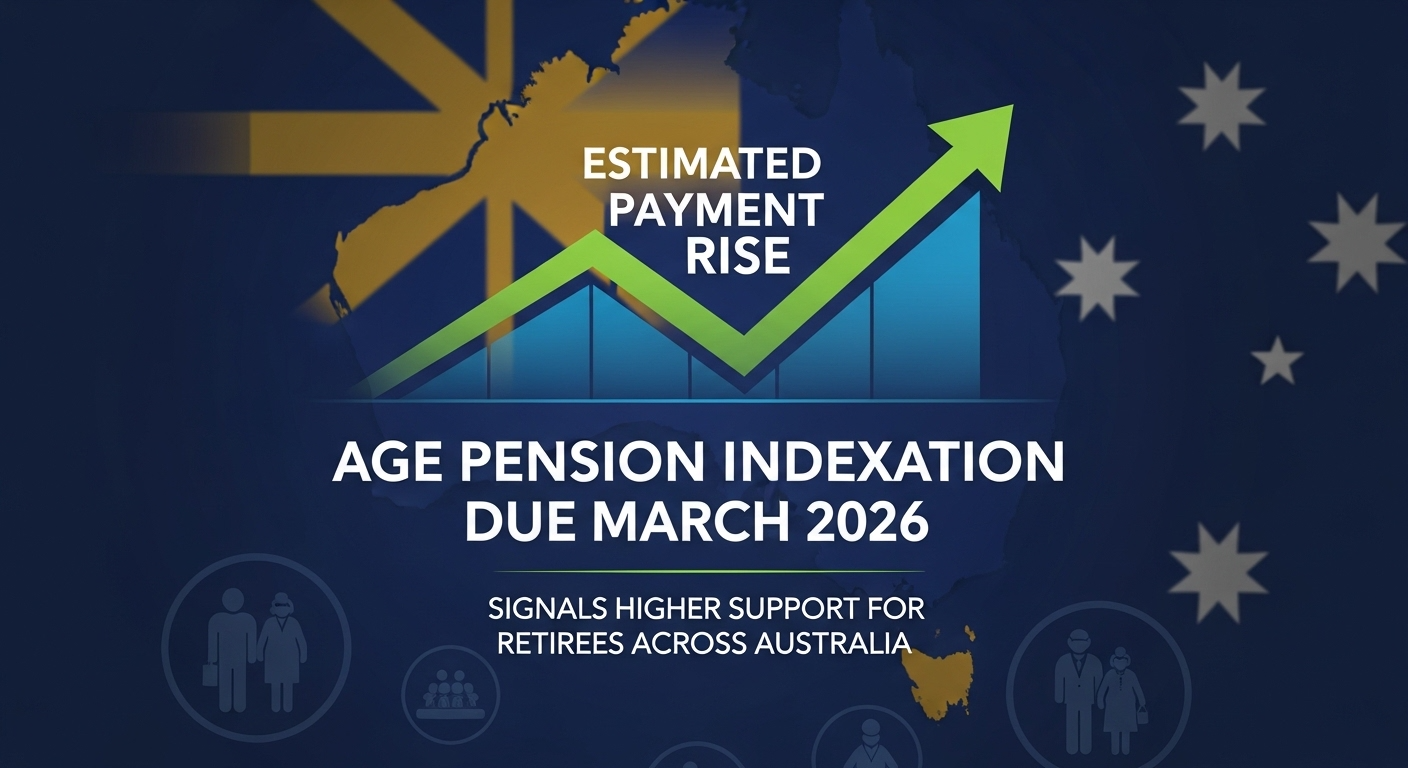
Age Pension Indexation Due March 2026 — Estimated Payment Rise Signals Higher Support for Retirees Across Australia
March 2026 is shaping up to be a significant month for millions of older Australians who depend on the Age Pension as their primary source of income. The scheduled pension indexation adjustment is due to take effect, and for retirees managing tight household budgets, even a modest increase in fortnightly payments can make a genuine difference to daily financial stability.
The government reviews and adjusts pension rates twice each year, in March and September, to ensure that payments keep pace with economic conditions. With grocery prices still elevated, energy bills continuing to climb, and rental costs remaining stubbornly high across much of the country, this round of indexation arrives at a moment when many retirees are feeling the pressure of rising costs from multiple directions at once.
While the adjustment may not dramatically transform living standards overnight, its importance lies in preventing pension payments from gradually falling further behind the real cost of living.
What Age Pension Indexation Actually Is
Indexation is not a bonus payment or a government gift. It is an automatic adjustment mechanism built into the pension system to ensure that payment rates reflect what is actually happening in the broader economy.
The core purpose of indexation is to keep pension rates aligned with inflation, reflect growth in wages, and ensure that retirees can continue to meet their basic living costs without their purchasing power eroding over time.
The adjustment applies to the base Age Pension rate, Pension Supplements, and certain income and asset thresholds that determine eligibility and payment levels. This means the update touches multiple parts of the pension calculation rather than simply adding a flat amount to the base payment.
How the Increase Is Calculated
The size of the March 2026 indexation adjustment is not decided arbitrarily. It is determined by a formula that compares three separate economic measures and applies whichever shows the highest growth.
Those three measures are the Consumer Price Index, which tracks general price inflation across the economy, the Pensioner and Beneficiary Living Cost Index, which specifically measures cost changes faced by pension recipients, and the Male Total Average Weekly Earnings benchmark, which reflects wage growth in the broader workforce.
By using the highest of the three measures rather than an average or a fixed figure, the system is designed to favour retirees and ensure that pension growth keeps up with whichever economic factor is putting the most pressure on household budgets at any given time.
Why the March 2026 Adjustment Is Drawing Extra Attention
While pension indexation happens twice every year, the March 2026 round is attracting more attention than usual because of the specific economic conditions surrounding it.
The cost of living has remained persistently high despite some moderation in headline inflation figures. Energy and insurance costs have continued rising at rates that outpace general price indexes. Rent remains expensive and difficult to manage for older Australians in many regions, particularly those without home ownership. Healthcare costs have been increasing faster than broader inflation, which hits retirees harder than most other demographic groups given their typically higher medical needs.
For retirees on fixed incomes, all of these pressures compound each other. A small fortnightly increase in pension payments does not fully offset each of these rising costs individually, but it does provide some additional buffer against the cumulative effect of all of them together.
How Much Could Payments Actually Increase
Final figures will not be confirmed until shortly before the March adjustment takes effect, but based on current economic indicators, modest increases are anticipated across pension categories.
Single pensioners receiving the full rate are expected to see a small increase in their fortnightly payment, likely amounting to a few additional dollars per fortnight. Combined couple rates may see a slightly larger combined adjustment. Some supplements linked to the pension may also undergo minor modifications as part of the same indexation process.
While these figures may sound modest when quoted in isolation, applied consistently over a full year they represent a meaningful addition to the annual income of retirees who have very little financial flexibility in their budgets.
Who Benefits Most From the Adjustment
All eligible Age Pension recipients benefit from indexation, but the practical impact is felt most strongly by certain groups within that population.
Full-rate pensioners with limited additional income stand to benefit most directly because the pension represents a larger proportion of their total household budget. Older Australians facing significant ongoing medical expenses also benefit disproportionately because their cost pressures tend to grow faster than general inflation.
Retirees renting in the private market benefit from any increase in the Rent Assistance supplement that may accompany the main payment adjustment. And seniors with little or no superannuation savings benefit most because they have the fewest alternative financial resources available to absorb rising costs.
Why Indexation Sometimes Does Not Feel Like an Increase
Despite the automatic nature of pension indexation, many retirees report that adjusted payments do not feel meaningfully larger in practice. There are legitimate reasons for this experience.
Household expenses for retirees frequently rise faster than pension adjustments, particularly when it comes to insurance premiums, council rates, and private rental costs that are not fully captured in the indexes used to calculate the adjustment. One-off unexpected expenses can quickly erode whatever additional buffer a small fortnightly increase provides. Some supplements remain unchanged even when base rates are adjusted, which limits the overall impact on total payment amounts.
This gap between the technical reality of an increase and the lived experience of receiving one is a persistent frustration for many retirees, and it reflects the broader challenge of keeping pension payments genuinely adequate in an environment of rising essential costs.
What Retirees Should Do Before March
There are a few practical steps worth taking ahead of the March adjustment to ensure payments are processed correctly and any associated changes are properly applied.
Once new rates take effect, reviewing updated payment summaries through the Centrelink online account is a good way to confirm that the adjustment has been applied correctly. Ensuring that all income and asset information on file with Services Australia is current and accurate is also important, as outdated records can affect payment calculations.
Retirees should also watch for any reassessment notices from Services Australia and take the opportunity to confirm whether they currently qualify for all available concessions and supplements, as some eligible recipients are not receiving everything they are entitled to.
Frequently Asked Questions
Is the March 2026 indexation increase guaranteed? Yes. Pension indexation is an automatic process that occurs independently of budget decisions or government announcements.
Will every retiree receive the same increase? No. The adjusted amount depends on individual payment types, eligibility status, and the specific components of each recipient’s pension arrangement.
Do retirees need to apply for the increase? No. The adjustment is applied automatically to all eligible pension payments without any action required from recipients.
Will Rent Assistance also increase? Rent Assistance is typically subject to indexation as well, though increases may not always move at the same rate as the base pension adjustment.
Is there another pension increase coming later in 2026? Yes. The next scheduled indexation review is due in September 2026, following the same twice-yearly cycle.
Can indexation ever result in a lower payment? No. The indexation mechanism is designed to maintain or increase payment levels. It does not reduce existing pension rates.