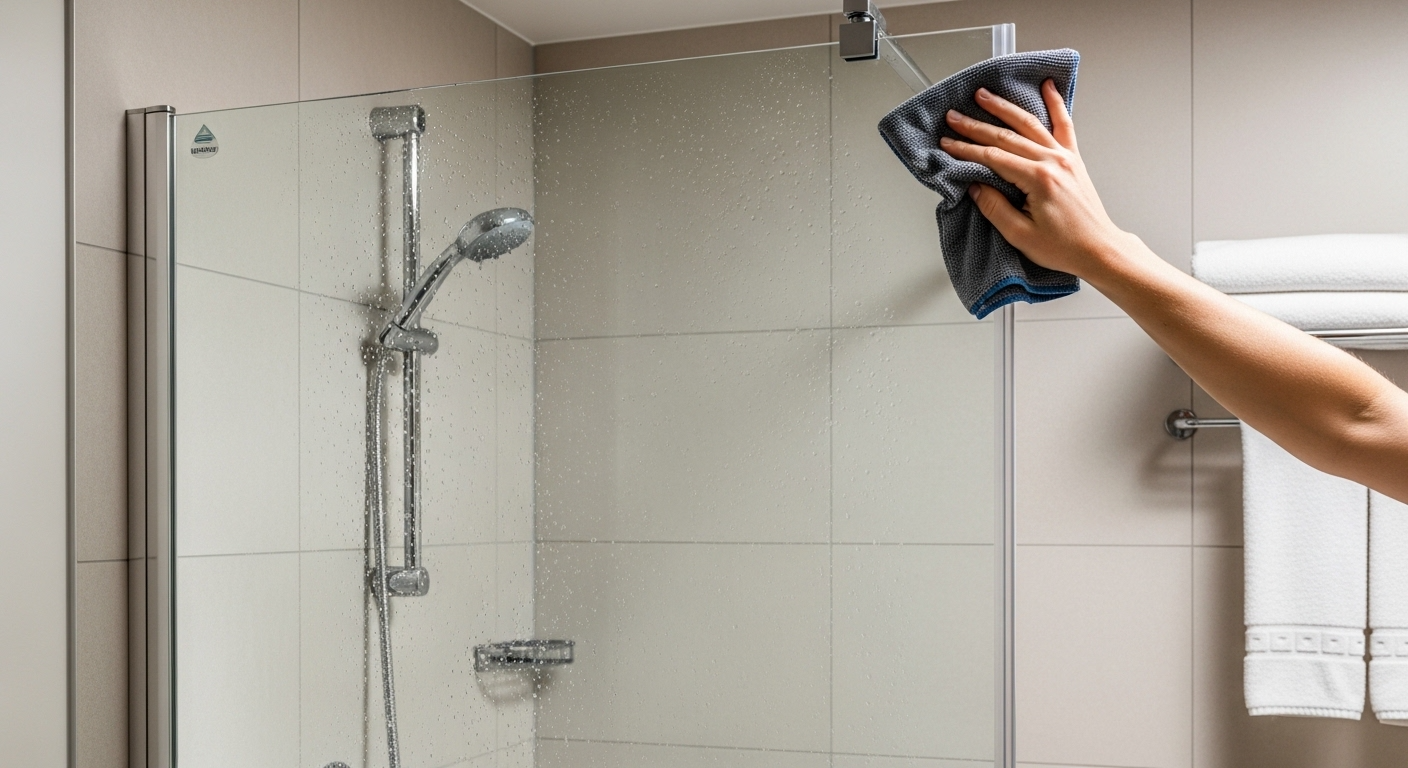
The Hotel Trick to Easily Clean Your Shower Screens So They Look New and Streak-Free
The first time you really notice the shower screen is usually the day you wish you hadn’t. You step into the bathroom, sunlight spilling in at that precise angle, and suddenly the glass isn’t glass anymore. It’s a collage of water spots, cloudy film, and streaks that make the whole room feel tired no matter how neatly the towels are folded. You swipe a finger down the panel and it leaves a trail like a snail on a window. You clean, scrub, rinse, repeat — yet the glass still looks vaguely grubby.
Meanwhile, at that hotel last summer, the shower screens were so spotless they practically disappeared. How on earth do they do that?
The Secret Language of Hotel Bathrooms
Walk into a good hotel bathroom and there’s a quiet kind of theatre happening. The tiles gleam, the chrome catches light from nowhere, and the shower screen is invisible — just a cool, clear partition that doesn’t distract from the serenity of the room. It creates that feeling that everything is fresh, untouched, reset just for you.
But behind the scenes, there’s no magic and no secret industrial product you can’t get your hands on. What there is instead is a rhythm. Hotel housekeepers know that glass is a living surface — it records every splash of water, each droplet of shampoo, every trace of minerals from the tap. Leave those memories long enough and they harden into soap scum and limescale that no amount of casual wiping will budge.
The real hotel trick isn’t just what they clean with. It’s when and how. Once you know their steps, you can steal that invisible-glass moment for your own shower at home.
The Core Hotel Trick: Clean While the Glass Is Warm
Most hotels train staff to clean the shower after it’s been used — either by the previous guest or by turning on the hot water briefly to steam the space first.
Warm glass behaves differently. The heat softens soap scum, loosens mineral deposits, and makes body oils less clingy. Instead of wrestling with hardened residue, you’re working with a surface that is halfway willing to let go of the grime. This is the true beginning of streak-free glass — not a miracle spray, but the simple physics of temperature and timing.
At home, that means this: the ideal moment to clean your shower screen is right after you shower, while the glass is still warm and mist clings to its surface. Not later that night. Not when you have time at the weekend. Right then, in that soft steamy pause before you move on with your day. That’s the hotel trick in its simplest form — ride the warmth.
The Hotel-Style Shower Screen Routine
To translate this into an easy, repeatable habit, you need just a few things. A squeegee with a flexible rubber blade, a soft microfibre cloth or two, and a gentle cleaning solution.
Most mid to high-end hotels rely on either a slightly acidic solution — often not much more complex than diluted vinegar — or a neutral pH glass cleaner that doesn’t leave behind soapy residue. The goal isn’t foam and bubbles. It’s film-free clarity.
Here’s the rhythm you’re aiming for, the same one played out in hotel bathrooms every day. Shower as usual. Turn off the water and leave the door closed for a minute so the warmth lingers. Lightly spritz the still-warm glass with your cleaner. Wipe or squeegee from top to bottom in smooth overlapping strokes. Buff edges and corners with a dry microfibre cloth.
It takes less time than brushing your teeth, and the effect compounds day after day. Instead of waiting until your shower screen is a problem, you maintain that hotel-level clearness with the same calm, unhurried energy housekeepers have perfected.
The Simple Formula: Acid, Heat, and Gravity
Three forces work in your favour when cleaning shower glass: a mild acid to dissolve mineral buildup, heat to soften residues, and gravity to move water downward and off the glass.
Most of the haze on your shower screen isn’t dirt in the traditional sense. It’s a blend of hard water minerals like calcium and magnesium mixed with soap fats and body oils. Regular soap reacts with minerals in water to create a film that clings to surfaces — this is soap scum, that waxy stubborn coating that seems to reappear almost overnight.
Hotels don’t allow that film to build up. You can do the same with a simple hotel-style solution made from one part white vinegar, three parts warm water, and an optional tiny drop of dishwashing liquid to help cut through oils. Vinegar provides the gentle acidity that dissolves mineral deposits without scratching glass. Too much dish soap and you swap cloudy minerals for soapy streaks, so keep that addition minimal.
The sequence is straightforward. Clean soon after a shower while the glass is still warm. Apply the solution in a fine mist — the glass should be damp, not dripping. Give it thirty to sixty seconds so the acid can work on the scale. Use a squeegee from top to bottom, pulling water down and off the glass. Then use a dry microfibre cloth for corners, edges, and the handle area.
Done right, the glass doesn’t just look clean. It looks calm. Light moves through it without distortion, and that hotel-like sense of order quietly settles in.
Building Your Own Hotel Kit at Home
You don’t need an industrial housekeeping cart to bring this method into your bathroom. What you need is proximity. Hotels make things easy for staff by keeping tools at arm’s reach, and that same principle is what will make or break your home routine.
A compact squeegee hung on a hook inside the shower. A labelled spray bottle with your vinegar-and-water solution. A couple of microfibre cloths folded neatly on a nearby shelf or tucked into a small caddy. When everything lives within touching distance of where you use it, the friction disappears. You finish your shower, reach for the squeegee, and do three slow passes. Less than two minutes. No leaving the room, no rummaging in cupboards, no complicated decisions.
This is the unglamorous practical part of the hotel trick: they design their workflows so that the path of least resistance is also the path to clean glass. At home, you can do exactly the same — design around your habits, not your intentions.
Rescuing a Neglected Shower Screen
Hotels have a head start because their glass is cleaned between every stay. At home, life happens. Mornings get rushed, weeks go by, and suddenly your shower screen looks like frosted glass — and not in the intentional design-magazine way.
You can still bring it back to clear, streak-free life. It just takes one deeper reset before the easy daily routine can maintain it.
Warm the glass thoroughly by running the shower hot for a few minutes until the glass is nicely fogged. Apply a stronger solution of equal parts white vinegar and warm water, pressing it into cloudy areas with a soft cloth. For very stubborn limescale, let it sit for five to ten minutes — this is where patience does the heavy lifting. If needed, gently rub with a non-scratch sponge, always testing a small area first. Squeegee the solution down and rinse with warm water. Once the glass air-dries, go over it with a dry microfibre cloth to erase any faint streaks.
After this deep reset, your shower screen has a fresh baseline — much like a hotel’s between guests. From there, the easy daily routine will keep it looking new with a fraction of the effort.
Frequently Asked Questions
How often should I clean my shower screen to keep it hotel-clear? A quick squeegee after every shower combined with a light spray-and-wipe two or three times a week is usually enough. In busy households or areas with very hard water, every second day works well. Consistency matters far more than intensity.
Will vinegar damage my shower screen or hardware? On glass, diluted vinegar is safe and effective. Avoid prolonged contact with natural stone like marble and some metal finishes, as acid can dull or etch them over time. Spray the glass directly and squeegee promptly rather than letting it pool on surrounding surfaces.
What if I hate the smell of vinegar? The smell fades quickly as the glass dries. You can reduce it by diluting more heavily or adding a few drops of essential oil to the spray bottle. Alternatively, use a commercial glass cleaner that is labelled streak-free and ammonia-free.
Do I really need a squeegee, or can I just use a cloth? You can use only a cloth, but the squeegee is what makes the process fast and hotel-efficient. It removes most of the water in seconds, which means less wiping, fewer streaks, and less effort overall. Once you get used to it, reaching for it becomes automatic.
Why does my shower screen still streak even when I clean it right away? Streaks usually come from too much product, a dirty cloth, or not removing all the water. Use a minimal amount of cleaner, choose a clean good microfibre cloth, and always finish in one direction with the squeegee before a quick buff on the edges.
Is it ever too late to rescue an old badly marked shower screen? If the glass is genuinely etched — meaning minerals or harsh cleaners have worn into the surface — it may never look perfectly new again. But a deep clean followed by the regular hotel-style routine will still make a dramatic improvement. If the glass is severely etched or permanently cloudy, replacement may be the only route to that truly invisible hotel look.