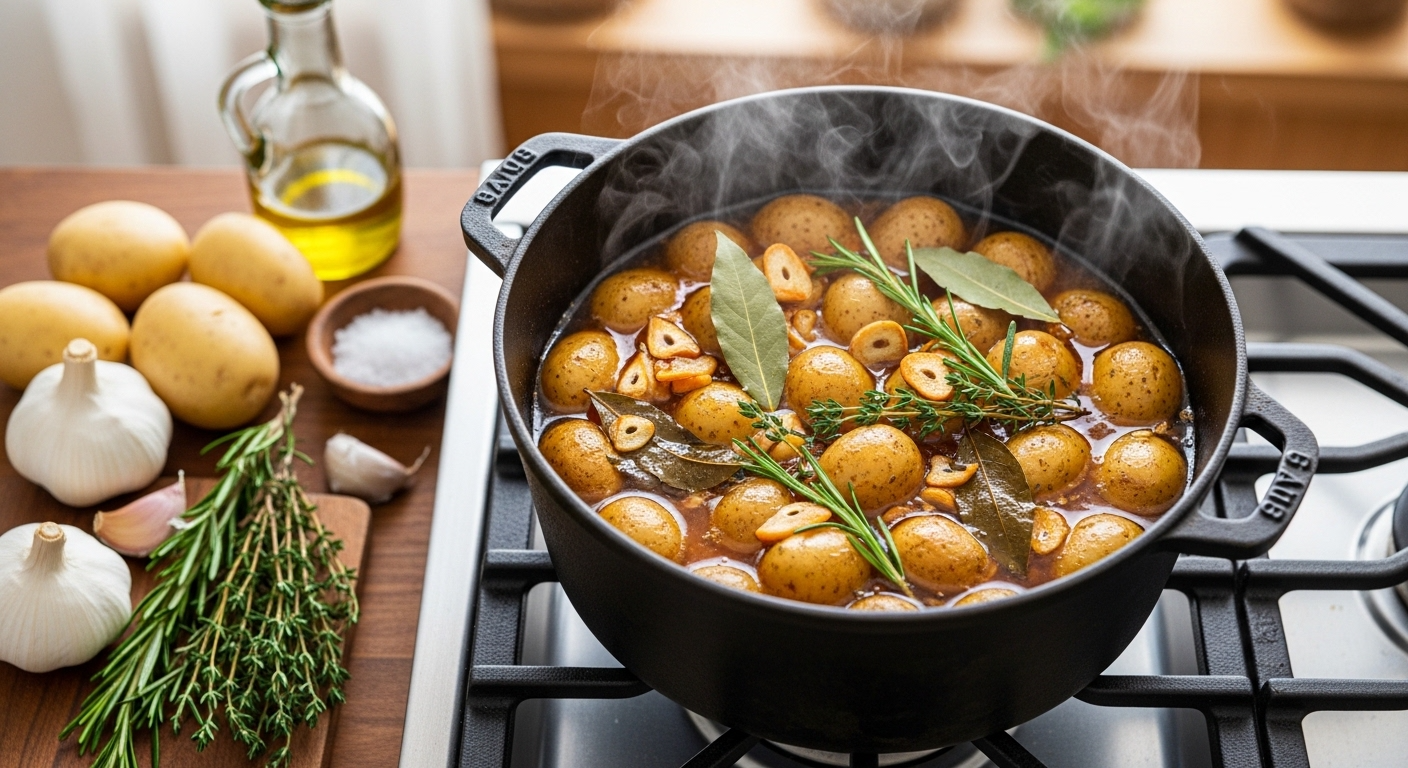
I Don’t Boil Potatoes in Water Anymore — I’ve Switched to This Aromatic Broth
The first time it happened, the whole kitchen smelled like a forest after rain. Steam curled up from the pot, carrying the scent of fresh herbs and citrus through the room, and what was supposed to be a simple side dish suddenly felt like something worth paying attention to.
That was the moment plain water stopped being an option. Boiling potatoes in an aromatic broth is one of those small kitchen changes that produces an entirely disproportionate improvement in the result — and once you have tasted the difference, going back feels genuinely impossible.
What Is Actually Wrong With Boiling Potatoes in Water
Plain water does one thing to a potato: it heats it. It transfers no flavour, adds no complexity, and contributes nothing to the final dish beyond the change in texture. The potato arrives on the plate tasting exactly like a potato that has been boiled in water — which is to say, not like very much at all.
This is the baseline most people have accepted for their entire cooking lives, not because it is the best approach but because it is the default, and defaults rarely get questioned. Salt in the water helps, certainly. But salted water is still water, and a potato cooked in salted water is still a potato that has only been salted on its surface rather than seasoned through its entire structure.
The aromatic broth approach changes the chemistry of the whole exercise. The potato is not just heated — it is steeped, slowly, in a liquid that carries flavour into every layer of the flesh as it cooks. The result is a potato that tastes of something other than starch and salt, and that something is deeply, genuinely good.
Building the Aromatic Foundation
The broth itself is not complicated, and it does not require a long list of expensive ingredients. The goal is to create a liquid with enough aromatic complexity to give the potatoes something worth absorbing — and that can be achieved with ingredients most home kitchens already have on hand.
The base starts with onions and garlic. These are the foundation of almost every flavour-building exercise in cooking, and they work equally well here. Rough chopping is fine — these are not going to be eaten directly, so appearance is irrelevant. What matters is that they release their aromatic compounds into the liquid as it heats.
Fresh herbs go in next. Thyme, rosemary, and bay leaves are the classic combination — earthy, woody, and slightly resinous in a way that complements the starchy neutrality of the potato without overwhelming it. If you are cooking in spring or summer, lighter herbs like parsley, chives, or dill produce a brighter, fresher result. In the colder months, rosemary and thyme with a few warming spices lean into the season rather than fighting against it.
Citrus zest is the element that surprises most people when they first encounter it in this context. A strip or two of lemon or orange peel added to the broth does something remarkable — it cuts through the earthiness of the herbs and the heaviness of the starch, introducing a brightness that keeps the finished potato from feeling heavy or one-dimensional. It does not make the potato taste of citrus. It makes the potato taste more alive.
Whole spices — peppercorns, coriander seeds, fennel seeds — can be added in small quantities for additional layers of background complexity. These are not dominant flavours. They are the depth charge sitting beneath the more obvious aromatics, making the overall flavour profile more interesting than it would be without them, even if you cannot name them individually when you taste the finished dish.
The Technique: Slow, Gentle, and Entirely Worth It
The broth method asks for a little more patience than boiling water, and that additional time is one of the things that makes it work. A rapid boil drives moisture out of the potato and strips away surface starch in a way that makes the flesh slightly grainy and hollow-tasting. A slow, gentle simmer does the opposite.
Start by bringing your liquid to a simmer rather than a boil. The surface should barely shiver, with occasional small bubbles rising lazily rather than the aggressive rolling movement of a full boil. Add the potatoes once the broth has had five to ten minutes to develop its aromatics and the kitchen starts to smell interesting.
From that point, allow thirty to forty-five minutes of gentle simmering, depending on the size of the potatoes. Small whole potatoes will be ready sooner. Larger pieces cut to a uniform size will take longer. The test is a skewer or knife tip passing through without resistance — not just at the edge but all the way through the centre.
During this time, the broth is doing its work. The potato flesh, which is essentially a sponge of compressed starch cells, is slowly absorbing the flavoured liquid that surrounds it. Flavour compounds from the herbs, spices, and citrus are being drawn into the structure of the potato rather than sitting on its surface. By the time it is cooked through, the seasoning is genuinely part of the potato rather than an afterthought applied afterward.
Adapting to the Seasons
One of the genuinely pleasurable aspects of this method is how naturally it responds to seasonal adjustment. The potato is a blank canvas in the best possible sense — it absorbs and reflects whatever you choose to cook it in, which means the broth can change with the time of year without the technique changing at all.
In spring, the broth leans toward lightness and freshness. Chives, parsley, dill, and a generous amount of lemon zest produce a potato that tastes unmistakably of the season — bright, green, and clean. These work beautifully alongside fresh peas, asparagus, or any of the early-season produce that arrives as the weather warms.
Summer calls for basil, lemon, and perhaps a few peppercorns. The result is fragrant and slightly floral, which pairs well with grilled meats and fish or sits comfortably at the centre of a warm salad. The citrus element can be pushed harder in summer — more zest, perhaps a small squeeze of juice added at the end — because the season can hold it.
Autumn and winter ask for more weight and warmth. Rosemary, thyme, bay, and fennel seeds produce a broth that smells of Sunday roasts and cold evenings. The finished potato feels genuinely comforting in a way that a water-boiled potato never quite manages, even when loaded with butter afterward. The flavour is already built in from the cooking itself, which means less work is needed at the end to make the dish feel complete.
What to Do With the Broth After Cooking
This is where the method offers an unexpected secondary benefit that most people do not anticipate the first time they try it. The liquid left in the pot after the potatoes are cooked is not just vegetable water to be poured down the drain. It is a flavoured stock that carries the starch of the potatoes alongside all the aromatics that produced the flavour in the first place.
Strained and stored, this broth keeps in the refrigerator for up to five days and in the freezer for several months. It can be used as a base for soup, as the liquid component of a stew, or as a cooking medium for other vegetables. Root vegetables cooked in potato broth take on a quiet complexity that is difficult to achieve any other way, because the starch from the potato cooking adds a subtle body to the liquid that plain stock does not have.
It can also be used to cook grains. Rice or pearl barley simmered in leftover aromatic potato broth absorbs the flavour of the herbs and spices in exactly the same way the potatoes did, producing a side dish that is significantly more interesting than anything cooked in plain water. Nothing is wasted, and the effort of making the broth in the first place yields benefits that extend across multiple meals.
The Mindfulness Dimension Nobody Talks About
There is something about a gently simmering pot that operates differently in the kitchen from the aggressive efficiency of a rapid boil or the passive convenience of a microwave. The aromatic broth method slows the cooking process down in a way that changes the experience of being in the kitchen — not dramatically, but noticeably.
The smell is a large part of this. Herbs and citrus releasing their compounds into warm liquid produce an aroma that is difficult to be indifferent to. It fills the kitchen in a way that makes the space feel inhabited and purposeful. It is the kind of smell that makes other people in the house wander in to ask what is being cooked, even when the answer is technically just potatoes.
The thirty to forty minutes of simmering creates a natural pause in the cooking process — time that can be spent preparing the rest of the meal, sitting nearby, or simply being in the kitchen with something pleasant happening. It is a small but real argument for the value of cooking techniques that build in rest rather than demanding constant attention.
Dietary Considerations and Practical Variations
The base broth as described is naturally vegan and gluten-free, which makes it one of the most adaptable cooking techniques available for households with mixed dietary requirements. No animal products are required at any stage, and none of the aromatics involved contain gluten.
For low-sodium households, the broth can be built entirely without added salt and still produce a flavourful result — the herbs, spices, and citrus carry enough aromatic complexity to make the finished potato taste seasoned even without sodium. Salt can be added at the table by those who want it, giving individual control without compromising the dish for those who need to limit it.
For low-FODMAP requirements, the garlic and onion can be replaced with the green parts of spring onions and a small amount of asafoetida, which provides a similar background depth without the fructan content that triggers symptoms. The herbs and citrus remain entirely suitable, so the aromatic quality of the broth is not significantly compromised by the substitution.
The broth also works as a base for other vegetables, which makes it useful on days when potatoes are not the focus of the meal. Carrots, parsnips, cauliflower, and Brussels sprouts all respond well to gentle simmering in an aromatic liquid, absorbing flavour in the same way potatoes do while adding their own character to the broth in return.
Frequently Asked Questions
Why does cooking potatoes in broth produce a better result than salted water? Salted water seasons the surface of the potato but contributes nothing to the interior. An aromatic broth carries flavour compounds into the flesh of the potato as it cooks, producing a potato that is seasoned through its entire structure rather than just at the edges.
How long does the broth take to prepare before adding the potatoes? The aromatic base needs about five to ten minutes of gentle simmering before the potatoes go in. This allows the herbs, garlic, onion, and citrus to begin releasing their flavour compounds into the liquid, so the potatoes are entering a broth that is already working rather than cold liquid that has yet to develop.
Can I make the broth in advance? Yes, and it is worth doing so when time allows. The broth keeps in the refrigerator for up to five days and in the freezer for several months. Having a batch ready means the aromatic potato method adds almost no extra time to weeknight cooking.
What is the best type of potato for this method? Waxy varieties like Kipfler, Dutch cream, or any small salad potato hold their shape through the gentle simmer and absorb flavour particularly well due to their denser cell structure. Floury varieties like Sebago or Russet also work well, particularly if the goal is a mash — the absorbed broth flavour carries beautifully into the finished mash alongside butter and cream.
Can I use stock instead of water as the broth base? Absolutely, and it produces an even richer result. A light vegetable or chicken stock used as the liquid base for the aromatic broth adds an additional layer of savoury depth that water cannot provide. Be mindful of the sodium content of the stock if you are also adding salt.
How do I know when the broth is ready and the potatoes are done? The broth is ready when it smells deeply aromatic — usually within ten minutes of beginning to simmer. The potatoes are done when a skewer passes through the centre without resistance. This typically takes thirty to forty-five minutes depending on size and variety.
What can I do with the leftover broth after cooking? Strain it and store it. The leftover liquid is a flavoured, lightly starchy stock that can be used as a base for soup, as a cooking liquid for grains or other vegetables, or as a component in a sauce or stew. It should not be discarded.
Is this method suitable for people who do not enjoy strong herb flavours? Yes, with adjustment. Reducing the quantity of herbs and relying more on the onion, garlic, citrus, and a small amount of peppercorn produces a much gentler result that adds interest to the potato without any dominant herbal note. The method is entirely scalable in terms of flavour intensity.
The Bottom Line
Plain water has been the default for boiling potatoes for so long that most people have never questioned it. But defaults exist because of habit, not because they are the best available option — and in this case, there is a clearly better option that takes almost the same amount of effort and produces a dramatically more interesting result.
An aromatic broth built from herbs, garlic, onion, citrus, and a few whole spices transforms the act of cooking potatoes from a utilitarian task into something that fills the kitchen with warmth and produces a finished dish that tastes as good as it smells. The potato is the same. The technique is the same. The only thing that changes is what the potato is cooked in — and that single change makes all the difference.
Once you have cooked potatoes this way, the plain water pot will feel like a choice rather than the obvious approach. And it will feel like the wrong choice.
Read more: https://wizemind.com.au/