Long Considered “Old-Fashioned,” This Is Actually the Hairstyle Most Recommended by Hairdressers After 50
She’s sixty-two, with silver threaded through the brown. She’s spent most of her life chasing hair trends — shag cuts in her twenties, perms in her thirties, layers and highlights in her forties, the occasional impulsive bob after a big life event. But today, she leans toward the salon mirror, squints, and sighs.
“I don’t want to look like I’m trying too hard,” she tells the hairdresser. “But I also don’t want to feel invisible.”
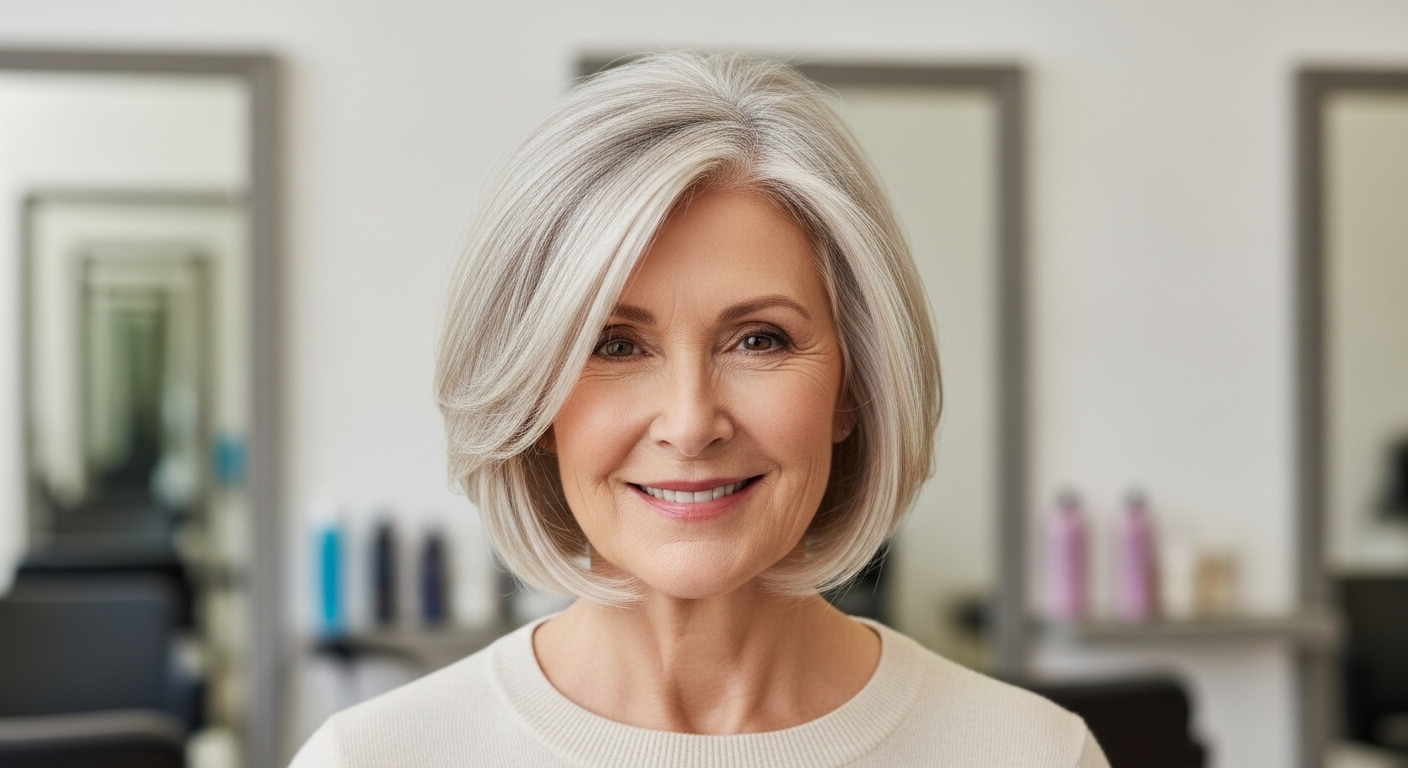
The stylist smiles the way hairdressers do when they’ve heard a question like this a hundred times and still treat it like it’s brand new. She lifts a section of hair, studies the fall and weight of it. “Have you ever thought about going back to something classic? A soft, polished bob. Chin to collarbone. It’s the cut I recommend most once my clients hit fifty.”
There’s a pause. “A bob? Isn’t that a bit old-fashioned?”
The stylist shakes her head. “Not the way we do it now.”
The Cut That Refuses to Stay in the Past
The bob is a hairstyle that refuses to stay in any one decade. It has slipped in and out of fashion like a familiar song — sharp and rebellious in the 1920s, sleek and glossy in the 1960s, tousled and layered in the 1990s. But if you sit in enough salon chairs and chat with enough experienced stylists, a pattern emerges.
Ask most hairdressers, and they’ll tell you: a bob — soft, customised, a little undone — is the cut they quietly recommend most often after fifty. Not because fashion magazines command it, but because hair itself starts changing the rules somewhere in midlife.
Hair thins. Texture gets wirier or flatter. Curls loosen, or suddenly appear where there never were any. The once casual ponytail starts to feel less like a lazy-day choice and more like a necessity to hide what doesn’t quite behave anymore. Long hair can still be glorious after fifty, of course — but it often requires more time, more product, and more patience than many of us care to give.
The bob sits in that sweet spot between effort and ease. Structured enough to say “yes, I see myself and I’m taking care.” Forgiving enough to survive a day of errands, a gust of wind, a humid afternoon, or a late dinner lit only by candles and conversation.
Why Hairdressers Keep Coming Back to the Bob
Spend time watching a seasoned stylist at work and you’ll see there’s real strategy in the scissors. They’re reading the hair like a map — density, growth patterns, cowlicks, how much time you realistically want to spend with a round brush. The bob keeps winning those quiet consultations for a few very practical reasons.
First, there’s structure. As we age, our faces change in ways we don’t always notice directly. Skin softens, jawlines blur, cheeks hollow slightly. A well-cut bob adds back a sense of architecture. A line at the jaw creates the illusion of lift. A slightly angled bob, longer in the front, can sharpen a softer jaw without ever looking severe. A chin-length version draws the eye upward, highlighting eyes and cheekbones instead.
Then there’s volume. Thinning hair is one of the most common complaints stylists hear after fifty. Long hair can drag what remaining volume exists completely flat against the scalp. A bob, by removing length and weight, allows hair to spring back up and find its natural body again. Stylists cut tiny hidden layers or use precise point-cutting techniques that release movement while keeping the shape intact. To the client it feels like magic: how did you make my hair look thicker?
There’s also manageability. Whether you wear your bob straight, wavy, or curly, the shorter length means quicker drying, less arm strain, fewer products needed to coax it into shape. It’s the kind of hair you can live with, not just pose with.
And a modern bob is a chameleon. Sleek and smooth for a big presentation, mussed with texture spray for weekends, tucked behind the ear to reveal earrings and necklines, or blown under for a more polished look. It doesn’t scream “I’m trying to look young,” nor does it announce “I’ve given up.” It simply says: this is who I am right now.
The Many Versions of the Modern Bob
Not all bobs are created equal. The genius of this so-called old-fashioned cut is how personal it can be. The best hairdressers never pull out a one-size-fits-all shape — they adapt it to your hair, your lifestyle, your face, and even how you naturally hold your head.
For fine or straight hair, a blunt one-length bob at or just below the chin can be transformative. No layers to thin it out further — instead, a clean line that makes the ends look fresh, dense, and healthy. A slight under-bevel, where the hair is cut longer on top and shorter underneath, lets the top layer fold under and creates the illusion of fullness.
For wavy hair, a softly layered bob around the collarbone embraces the wave instead of fighting it. A good stylist will cut into the wave pattern, encouraging natural curves to form instead of frizz. With a bit of leave-in conditioner and air-drying, the result is that coveted effortless texture that looks modern with almost no effort.
For curly hair, the bob has become something of a quiet revolution. Gone are the triangle-shaped cuts that widened awkwardly at the ends. Curly bobs are now sculpted curl by curl into rounded silhouettes that hug the face and neck beautifully.
For silver and grey hair, something about the shorter defined shape turns what might feel like “old” hair into a genuine statement. The colour reads as intentional — a luminous frame around the face. Light hits the planes of the cut and reflects like metal, especially when the hair is well-conditioned and glossy.
The Emotional Side of Cutting
No haircut exists in a vacuum. There’s always a story tucked into the strands we decide to keep or cut away. For many women, long hair after fifty isn’t just about aesthetics — it’s about youth, identity, and familiarity. Those extra inches can feel like the last physical bridge connecting them to a younger version of themselves who wore braids and ponytails with careless ease.
So when a hairdresser suggests a bob, the first reaction isn’t always excitement. Sometimes it’s fear. Will I still feel like me? Is this me giving in to getting older? What if I hate it?
Good stylists know this and move slowly. They might start by taking off just enough to sit above the shoulders, letting you live in that almost-bob zone for a while. They show you how to tuck it behind one ear, how to flip the ends under with a round brush, how to let it flick out for a more undone French feel.
There’s a quiet moment, usually around the time the blow dryer clicks off, when you catch sight of yourself in the mirror with fresh eyes. Without the long curtain of hair, your face is suddenly more visible — to you, and to the world. It can be startling. But more often than not, there’s something else there too: a kind of clarity.
You might notice your eyes more. The shape of your lips. The slope of your neck and shoulders. The woman in the mirror looks undeniably like herself — but also a little more intentional, a little more present.
“I feel lighter,” clients say, sometimes with surprise. They’re not always talking about the hair.
What Everyday Life With a Bob Actually Looks Like
Once the salon glow fades and you’re back in your own bathroom with your own lighting, the real test begins: is this haircut a partner or a problem?
For a straight or slightly wavy bob, the routine is simple. A small amount of lightweight smoothing cream or mousse on damp hair, a quick rough-dry upside down for root volume, and a few passes with a round brush at the ends. That’s genuinely it for most mornings.
For a curly bob, it’s about moisture — a leave-in conditioner or curl cream scrunched into wet hair, a microfibre towel to gently squeeze out water without frizzing, and then air-drying or diffusing with minimal touching.
And styling doesn’t need to be perfect. Part of the charm of a modern bob is that it’s allowed to look lived-in. A bit of bend here, a stray piece there — it all adds to the sense of ease. Hairdressers often teach clients quick shortcuts: tucking one side behind the ear and leaving the other loose, adding a deep side part for instant drama, or pushing everything back off the face with a dab of styling cream for a softer swept look.
Trims every six to eight weeks keep the shape fresh. Unlike longer hair, which can start to look straggly when ends get thin, a bob thrives on clean edges. Those visits are usually quick — a gentle reshaping rather than a full reinvention.
Why “Old-Fashioned” Is Actually a Compliment
There’s a quiet irony in all of this. The hairstyle so many women dismiss as old-fashioned ends up being the one that makes them feel most current, most sharp, most themselves after fifty.
The bob may have roots in the past, but that’s its strength. It’s been tested by a century of different faces, fabrics, lifestyles, and ideals of beauty. It has been rebellious, corporate, artistic, polished, and undone. It knows how to hold all those contradictions at once.
For the woman searching for something that doesn’t make her feel like she’s pretending to be twenty-five or resigning herself to invisibility, the bob becomes something bigger than just a cut. It’s a middle path. A way of saying: I’m still here, I’ve changed, and I’m allowed to like the way I look now.
Someone might call it classic. Another might say chic. She’ll catch her reflection in a shop window and, for a brief second, not recognise herself — and then smile when she does.
Old-fashioned? Maybe. But in the quiet confident way that a favourite pair of jeans or a well-worn leather bag is old-fashioned — timeless because it works, because it doesn’t apologise for being simple, because it feels like home.
Frequently Asked Questions
Is a bob suitable for every face shape after 50? Almost every face shape can wear a bob, but the length and angle matter. Round faces often benefit from a slightly longer or angled bob, while oval faces can handle shorter chin-length versions. A good stylist will adjust the line to balance your specific features.
Can I keep my long hair after 50 instead of switching to a bob? Yes, if your hair is healthy and you enjoy caring for it. The bob is recommended often because it works well with age-related changes like thinning and dryness, but long hair can be beautiful at any age. The key is manageable length and regular trims.
How often should I trim a bob to keep it looking good? Most stylists suggest every six to eight weeks. Because the shape is so important in a bob, even small amounts of growth can change how it sits around your face. Regular minor trims keep it polished without dramatic changes each visit.
Will a bob make my hair look thicker? It often does. By removing heavy length and creating a defined edge, a bob can make fine or thinning hair appear fuller, especially if cut blunt at the ends or slightly under-bevelled. Subtle layers can also add lift and movement.
Is a bob high maintenance to style every day? Generally no. Most modern bobs are designed to work with your natural texture. Once you learn a simple styling routine — usually just a quick blow-dry or air-dry with the right product — the day-to-day upkeep is easier than longer styles that need more time and tools.