Hairstyles After 50: This Very Trendy Cut From the 60s Is Coming Back in 2026
You’re sitting in a modern salon, all matte-black mirrors and trailing plants, but something about the shapes you see reflected around you feels strangely familiar — like a photograph from your mother’s old shoebox. Except this time, it’s not your mother in the chair. It’s you. And your stylist is grinning because you’ve just asked for the cut that’s quietly sneaking back into fashion for 2026: a gloriously modern take on a 1960s classic.
The 60s Are Back — And They’ve Brought the Coolest Haircut
There’s a reason everyone keeps returning to the 1960s when they need a style reset. It was a decade that loved structure and drama, but also freedom and experimentation. Sharp lines and soft movement, eye-skimming fringes and jaw-defining bobs, hair that said: I know who I am and I’m not afraid to show it.
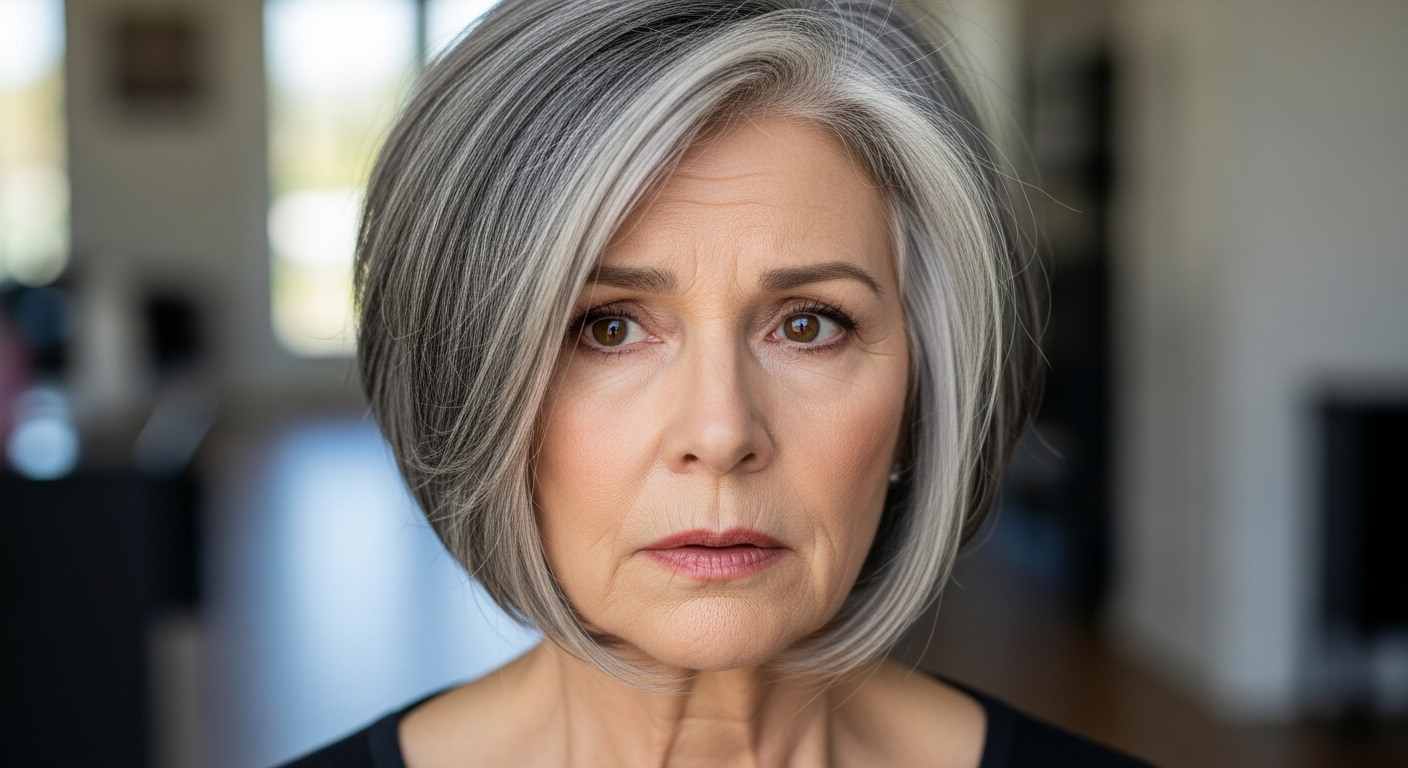
For women over 50, the hair trend shaping 2026 is a love letter to those years — a modern, wearable version of the iconic 60s shaggy bob with volume at the crown. It’s a hybrid between a classic bob, a soft shag, and a little French-girl nonchalance. Elegance, movement, and ease, all in one cut.
This isn’t costume hair. It’s not about chasing youth or turning yourself into a retro character. It’s about taking those 60s principles — face-framing layers, flattering height at the crown, lightness around the neck — and translating them into something that works with the way you actually live now.
What the Cut Actually Looks Like
Picture hair that grazes somewhere between your jaw and just below your collarbone. The length is blunt enough to feel intentional, but softened with internal layering so it swings when you move. The crown has subtle lift — not a stiff helmet, just natural airy volume that gives your profile a gentle upward push.
At the front, you have options. Wispy curtain bangs that open around your eyes. A softer side-swept fringe that hugs your cheekbones. Or a delicate micro-fringe that nods to 60s gamine icons with a slightly uneven, lived-in edge.
It’s not the hard geometric bob of the Mod girls, and it’s far from the teased skyscraper beehive. It sits in the democratic middle ground — structured enough to feel polished, relaxed enough to feel alive.
Why It Flatters Women Over 50 So Well
After 50, hair often tells a different story than it did in your twenties. Volume shifts, texture changes, and styles that used to just work start feeling flat or fussy. This is where the 60s-inspired shaggy bob earns its reputation.
The blunt base line gives a clean frame to your face, creating definition around the jaw and neck. Subtle layers near the crown add a little push upward, which is far more flattering than flat heavy hair that drags the features down. Waves, slight kinks, and bends are welcomed rather than straightened into submission, which makes styling faster and kinder to aging hair. And for those who have gone grey, the light-catching layers make silver and white strands look like intentional highlights — almost as if you paid for them.
More than anything, the cut carries an attitude. It quietly says: I’ve lived, I’ve loved, I’ve tried the perms and the pixies and the tight blowouts. Now I want something that feels like me, right here, right now.
How It Adapts to Different Hair Types
One of the reasons this style is catching on so quickly is its adaptability. It’s not a one-size-fits-all cut — it’s a framework your stylist can shape to suit your specific hair.
For fine or thinning hair, soft internal layers add movement without removing density, and a slightly shorter length keeps strands from looking wispy. For thick straight hair, more layering through the mid-lengths removes bulk while keeping the outline strong and clear. For wavy or softly curly hair, the layers follow the natural curl pattern and the result is a loose, airy look that’s easy to scrunch and go. For grey or salt-and-pepper hair, blunt ends feel modern while delicate surface layers showcase the natural dimension in the tones without frizzing them out.
None of these variations are about hiding your hair. They are about emphasising what it naturally wants to do, while giving it an elegant shape rooted in that 60s spirit.
What to Say to Your Stylist
If you’ve ever sat in the chair and stumbled over how to ask for what you want, you’re not alone. Here is language you can use directly.
Tell your stylist you’re looking for a 1960s-inspired bob with light layers and volume at the crown, but that you want it to feel modern and easy to style. Ask for movement and softness around your face rather than a sharp geometric bob. Request that the layers be soft and blended so your hair doesn’t look thin — you want lift, not choppiness. And mention that you’d like it to work with your natural texture so you’re not fighting your hair every morning.
Good stylists will know exactly where you’re pointing: the 60s, but without the stiffness. A bob, but one that breathes.
How to Style It at Home
One of the quiet revolutions of life after 50 is realising your time is more valuable than your hair’s. You still want to look good — maybe more than ever — but you’d rather spend twenty minutes on a morning walk than on an elaborate blowout. This cut was built for that reality.
Start with a lightweight hydrating shampoo and conditioner, since aging hair needs moisture but not heavy products that pull it flat. Apply a small amount of mousse or root spray at the crown to bring out that 60s lift. Flip your head and rough-dry upside down with your fingers for organic volume that avoids looking overly set. If needed, run a round brush around the perimeter to smooth and tuck the ends. Finish with a light texturising spray or soft-hold hairspray to keep everything airy rather than crunchy.
The magic is that your hair doesn’t need to be perfect. A slight wave on one side, a little extra lift on another — it all adds up to that cinematic, caught-in-a-breeze movement that feels more youthful than anything shellacked into place.
How It Works With Grey and Color
The 60s shaggy bob plays beautifully with every color choice, including the decision to go fully grey. If you’ve stopped coloring, this cut celebrates that. The layers naturally reveal the different shades in your hair — silvers, deeper pewter tones, the last hints of your original color — as though you’ve been hand-painted by a very patient colorist.
If you still enjoy color, the structure of this cut is a dream. Soft highlights at the crown support volume. Face-framing brightness lifts your features. A deeper shade at the nape adds depth. The idea is not to chase youth, but to amplify vibrancy.
Why This Trend Actually Matters
Trends can feel trivial, especially when you’ve lived through more of them than you can count. But the return of this 60s-inspired cut carries a deeper resonance for women over 50. It’s not simply that it’s flattering. It’s that it taps into a sense of continuity — between the woman you were at sixteen, experimenting in a bedroom mirror, and the woman you are now, wiser, bolder, and far less concerned with anyone else’s rules.
When you choose a cut that nods to a past decade, you’re not trying to go backwards. You’re doing something more interesting: folding time. Taking the parts of that era that still feel alive in you — the daring, the fun, the willingness to make a statement — and weaving them into a look that fits your present life.
The fashion world is finally catching up to this idea. As runways and campaigns begin to feature more women over 50, hair trends increasingly prioritise cuts that move, flatter, and express personality rather than just youth. This 60s-inspired shaggy bob is part of that shift — a trend that doesn’t leave you out, but puts you right at its centre.
Frequently Asked Questions
Is this cut high maintenance? Not at all if it’s tailored correctly. The idea is to work with your natural texture. Most women can style it in ten to fifteen minutes with a quick rough-dry, a little root lift, and light finishing product.
Will it make my hair look thinner? When done properly, no. The trick is soft internal layering rather than aggressive thinning at the ends. Ask your stylist to preserve density at the perimeter while adding movement inside the shape.
Can I wear this if my hair is very curly? Yes, but it needs a curl-savvy stylist. The layered bob with crown volume can be adapted to curls by cutting on dry or lightly stretched hair and following the natural curl pattern.
Does it work with fully grey or white hair? Absolutely. The layers help natural variations in tone catch the light, giving a multi-dimensional effect without highlights. Grey can look incredibly chic in this shape.
How often will I need trims? Most people do well with a trim every six to eight weeks. If you prefer a sharper outline, every five to six weeks will keep the bottom line crisp and the crown detail fresh.
What if I don’t want a fringe? You don’t need one. The 60s feel can come from the silhouette alone — lifted crown, gently layered bob, and soft pieces around the face without a full fringe.
Can this cut help with thinning at the top? It can help significantly. Strategic layering and light root-lift products create the illusion of more volume at the crown, while soft face-framing pieces draw the eye toward your eyes and cheekbones instead.