Hairstyles After 70: The 4 Most Flattering Haircuts for Women Who Wear Glasses and How They Help the Face Look Younger
When Ruth settled into the salon chair at 72, she was not just looking for a trim. She was looking for a hairstyle that would work with her glasses, suit her face, and make her feel genuinely alive again — not just presentable.
For women over 70 who wear glasses, finding the right haircut is rarely straightforward. The relationship between your hair, your face shape, and your frames is delicate, and getting that balance right can make the difference between looking tired and looking effortlessly put together.
Why Hair, Face, and Glasses Must Work Together
Most women focus on either their hair or their glasses when thinking about their appearance. Very few think about how the three elements — hair, face, and frames — interact as a complete picture, and that is where most styling mistakes happen.
The wrong haircut can make glasses feel heavy and dominant, dragging attention downward and adding years to the face. The right haircut does the opposite. It lifts the eye, creates the illusion of structure and volume where age may have softened it, and lets the glasses become part of a polished, intentional look rather than an afterthought.
Understanding this relationship is the foundation of every flattering haircut recommendation for women over 70. It is not about following trends or copying a celebrity. It is about understanding your own face and working with it, not against it.
The Classic Bob: Timeless, Structured, and Incredibly Versatile
The classic bob has been flattering women of all ages for generations, and there is a very good reason it consistently tops the list for women over 70 who wear glasses. It works.
A chin-length bob frames the face in a way that draws the eye directly to the eyes and cheekbones — precisely the features that glasses are already highlighting. When the hair length and the glasses frames occupy a similar visual zone, they work together rather than competing, creating a cohesive and balanced appearance.
For women with wider frames, a bob that hits at or just below the chin helps to balance out the horizontal line of the glasses. The result is a more proportionate, structured look that reads as polished and deliberate rather than accidental. It is a cut that ages beautifully, requires relatively low maintenance, and suits a wide range of face shapes.
The bob also has a quiet confidence to it. Women who wear a well-executed bob tend to carry themselves differently — it is a cut that signals intention, and that sense of intention reads as youthful regardless of age.
The Layered Shag: Soft, Modern, and Full of Movement
The layered shag is having a well-deserved moment, and for women over 70 who wear glasses, it offers something that very few other cuts can deliver — movement and softness without sacrificing structure.
As hair naturally loses density and volume with age, many women find themselves stuck in flat, heavy styles that do little to flatter the face. The layered shag solves this directly. The soft, wispy layers add texture and the appearance of volume, making the hair feel alive and modern rather than flat and dated.
For glasses wearers specifically, the layers serve an additional purpose. They soften the hard lines of angular or geometric frames, creating a more harmonious contrast between the precision of the glasses and the relaxed movement of the hair. The overall effect is a face that looks naturally animated and refreshed.
The layered shag also works particularly well for women who want low-maintenance style. Once cut correctly, the layers fall into place with minimal effort, making it an ideal choice for women who want to look considered without spending hours in front of the mirror every morning.
The Pixie Cut: Bold, Defined, and Surprisingly Youthful
The pixie cut intimidates a lot of women, particularly those who have never worn their hair short. But for women over 70 who wear glasses, it can be one of the most transformative cuts available — and far more wearable than most people assume.
The magic of the pixie lies in what it draws attention to. By removing length and bulk from around the face, a well-executed pixie directs all focus toward the eyes and cheekbones — the exact features that tend to be a woman’s most striking and that glasses are already drawing attention toward.
The tapered sides and back of a classic pixie also create the visual impression of a more defined jawline. As skin naturally loses firmness with age, this is not a small thing. A cut that creates the illusion of a cleaner jawline and a more sculpted facial structure can genuinely take years off a person’s appearance without any cosmetic intervention.
Paired with the right glasses — particularly frames with some width and definition — a pixie cut creates one of the most effortlessly chic looks available to women in their seventies. It is a combination that reads as intentional, confident, and thoroughly modern.
Softly Layered Styles: The Gentle Middle Ground
Not every woman wants a bob, a shag, or a pixie. For those who prefer to keep some length while still achieving a flattering, glasses-friendly result, softly layered styles offer the ideal middle ground.
Soft layers added through the mid-lengths and ends of longer hair create gentle movement without dramatically changing the overall shape. They remove weight from areas that can drag the face downward, which is one of the most common ways that longer hair makes women over 70 look older than they are.
For glasses wearers, the key with longer layered styles is ensuring that the layers begin above the glasses line. Layers that start at the cheek or above draw the eye upward, lifting the overall impression of the face and creating a more alert, energised appearance. Layers that sit below the glasses line tend to add weight visually, which works against the goal.
Softly layered styles also offer the most flexibility in terms of daily styling. They can be worn straight, lightly waved, or softly curled, giving women the ability to adapt their look to different occasions without needing a different cut for each one.
Matching the Cut to Your Face Shape and Frames
Understanding which cut works best requires thinking honestly about two things: the shape of your face and the style of your glasses frames. These two factors together should guide every decision made in the salon chair.
Women with round or oval faces generally benefit most from cuts that add height and vertical definition. A textured pixie or a layered shag with height at the crown creates the impression of a longer, more angular face, which tends to look younger and more defined. Wider glasses frames on a round face can be balanced beautifully by a cut that draws the eye upward rather than outward.
Women with square or heart-shaped faces carry strong natural structure in their jaw and forehead. The goal here is softness rather than more definition. A classic bob with a slight wave or a softly layered style brings gentle curves to the face, complementing the angles rather than amplifying them. Fine, delicate glasses frames tend to work particularly well with these cuts, as they avoid adding more visual weight to an already strong facial structure.
Women with longer faces benefit from cuts that add width rather than height, such as a full bob or a shag with volume through the sides. Wider glasses frames are a natural ally here, and hair that does not elongate the face further creates a more balanced and proportionate result.
The Deeper Point: This Is About Confidence, Not Just Appearance
Every woman who has walked into a salon feeling uncertain and walked out feeling transformed knows that this conversation is about more than aesthetics. A haircut that works — that genuinely flatters the face and sits beautifully with the glasses — does something to a person’s confidence that nothing else quite replicates.
For women over 70, there is sometimes a temptation to play it safe. To go shorter out of practicality rather than intention. To stick with what has always been done rather than risk something new. But playing it safe does not always serve you. A cut chosen out of habit rather than genuine suitability can quietly reinforce a feeling of fading rather than flourishing.
The women who look most vital and most themselves at 70, 75, and beyond are almost universally the ones who have made active, considered choices about how they present themselves to the world. Their haircuts do not look accidental. They look chosen. And that sense of intention is itself a form of youthfulness that no product can replicate.
Practical Maintenance Considerations
One of the real advantages of the four cuts recommended here is that all of them are designed to work with the natural changes that hair undergoes with age rather than fighting against them. Thinning, loss of density, and changes in texture are all accounted for in the structure of these styles.
As a general rule, women over 70 benefit from a trim every six to eight weeks to maintain the shape and freshness of their chosen cut. Shorter styles like the pixie require more frequent visits to stay sharp, while longer layered styles can often go a little longer between appointments without losing their integrity.
Volumising products work particularly well with the layered shag and softly layered styles, adding body and movement that helps maintain the youthful effect of the cut throughout the day. For the bob and pixie, a small amount of defining product through the ends or fringe can keep the style looking intentional rather than limp. Always consult your stylist about what suits your specific hair type.
Frequently Asked Questions
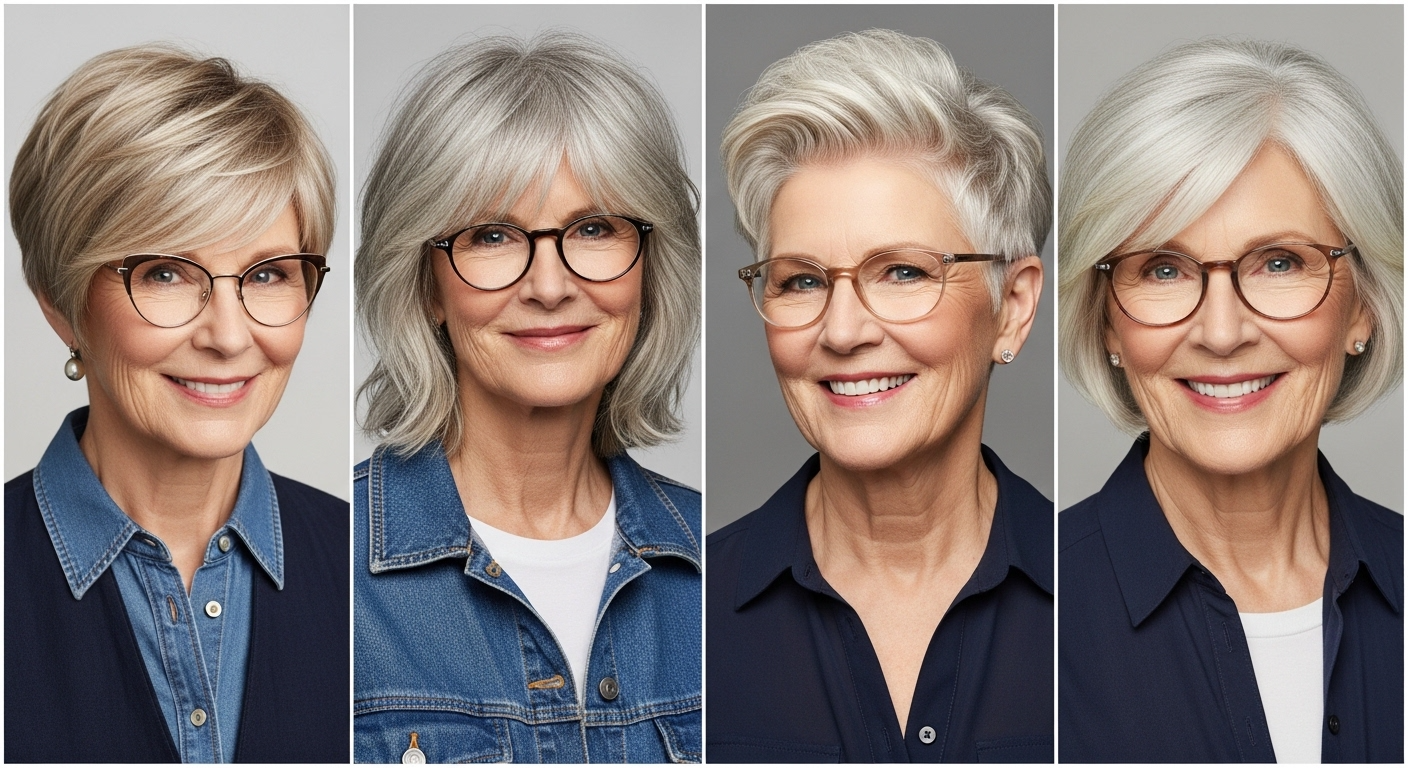
What are the four most flattering haircuts for women over 70 who wear glasses? The four cuts that consistently deliver the best results are the classic bob, the layered shag, the pixie cut, and softly layered styles. Each one is designed to work with the face and glasses simultaneously, rather than treating them as separate concerns.
How do these cuts actually make the face look younger? They do this through a combination of techniques — creating the illusion of lifted structure, drawing the eye toward the eyes and cheekbones, adding volume where age has reduced it, and softening any heaviness that tends to accumulate around the lower face. The net effect is a face that reads as more alert, defined, and energised.
Can I still wear my usual glasses with these styles? Not only can you — you should. These cuts are specifically designed to complement glasses rather than compete with them. The interplay between the hair and frames is part of what makes each style so effective.
How do I know which cut suits my face shape? Round and oval faces benefit from height and vertical definition. Square and heart-shaped faces need softness and gentle curves. Longer faces need width rather than more length. A good hairstylist who understands face shapes can give you a personalised recommendation based on your specific features and your glasses.
Will a shorter cut like the pixie really look good at my age? For many women, the pixie is more flattering after 70 than it was at any earlier point in their lives. As the face matures, strong cheekbones and expressive eyes become defining features, and the pixie is specifically designed to highlight exactly those things. The key is finding a stylist who understands how to tailor the cut to your individual face.
How often should I get my hair cut to maintain the look? Every six to eight weeks is the general recommendation for most of these styles. Shorter cuts like the pixie may need attention every four to six weeks to stay sharp and intentional rather than overgrown and shapeless.
Are there specific products that work best with these styles? Volumising mousse or spray works well for the layered shag and softly layered styles. Light pomade or wax adds definition to the pixie. A smoothing serum or light hold spray suits the bob particularly well. Always discuss product choices with your stylist based on your hair’s specific texture and density.
What if I have been wearing the same style for years and am nervous about changing? That nervousness is completely understandable and incredibly common. But the women who report feeling most themselves after a change are almost always the ones who had been hesitating for years. A consultation with a trusted stylist — before any scissors come out — is a low-risk way to explore what might be possible.
Finding the right haircut after 70 is not about chasing youth or following trends. It is about making an active, informed choice that honours who you are right now and presents the best version of that person to the world.
For women who wear glasses, that choice carries an extra layer of consideration. The frames are already there, already drawing attention, already making a statement. The right haircut simply ensures that everything working together — hair, face, and glasses — tells a coherent and flattering story.
Ruth walked out of that salon chair feeling like herself again. Not a younger version of herself, not a different version of herself. Just the most alive and considered version of who she already was. That is exactly what the right haircut can do — and at any age, that is worth getting right.
Read more: https://wizemind.com.au/