Boiling Rosemary Is the Best Home Tip I Learned from My Grandmother and It Can Completely Transform the Atmosphere of Your Home
One of the most enduring home remedies I ever learned came from my grandmother, and it involved nothing more complicated than a small pot of water and a handful of rosemary. It was not a wellness trend or something she had read about online. It was simply what she did, the way she had always done it, passed down through years of quiet domestic knowledge that never needed a hashtag or a tutorial to survive.
I remember standing in her kitchen as a child, afternoon sunlight coming through the window at that particular angle it only ever reaches in late afternoon, watching her crush dried rosemary leaves between her fingers before dropping them into a pot on the stove. Within minutes the whole house changed. It smelled like a forest after rain. Fresh and herbal and deeply, inexplicably calming. I did not understand then why it worked. I only knew that it did, and that the feeling it created was one I wanted to carry with me.
Years later, it is still the first thing I reach for when a room feels stale or a day has left its weight behind in the walls.
The Kitchen That Always Felt Like Coming Home
My grandmother’s kitchen was not a beautiful space in any designed or deliberate sense. There were mismatched mugs on hooks and wooden spoons worn down from decades of use and a general sense of things having been arranged by life rather than intention. But the air in that kitchen was always welcoming in a way that had nothing to do with the decor and everything to do with what was happening on the stove.
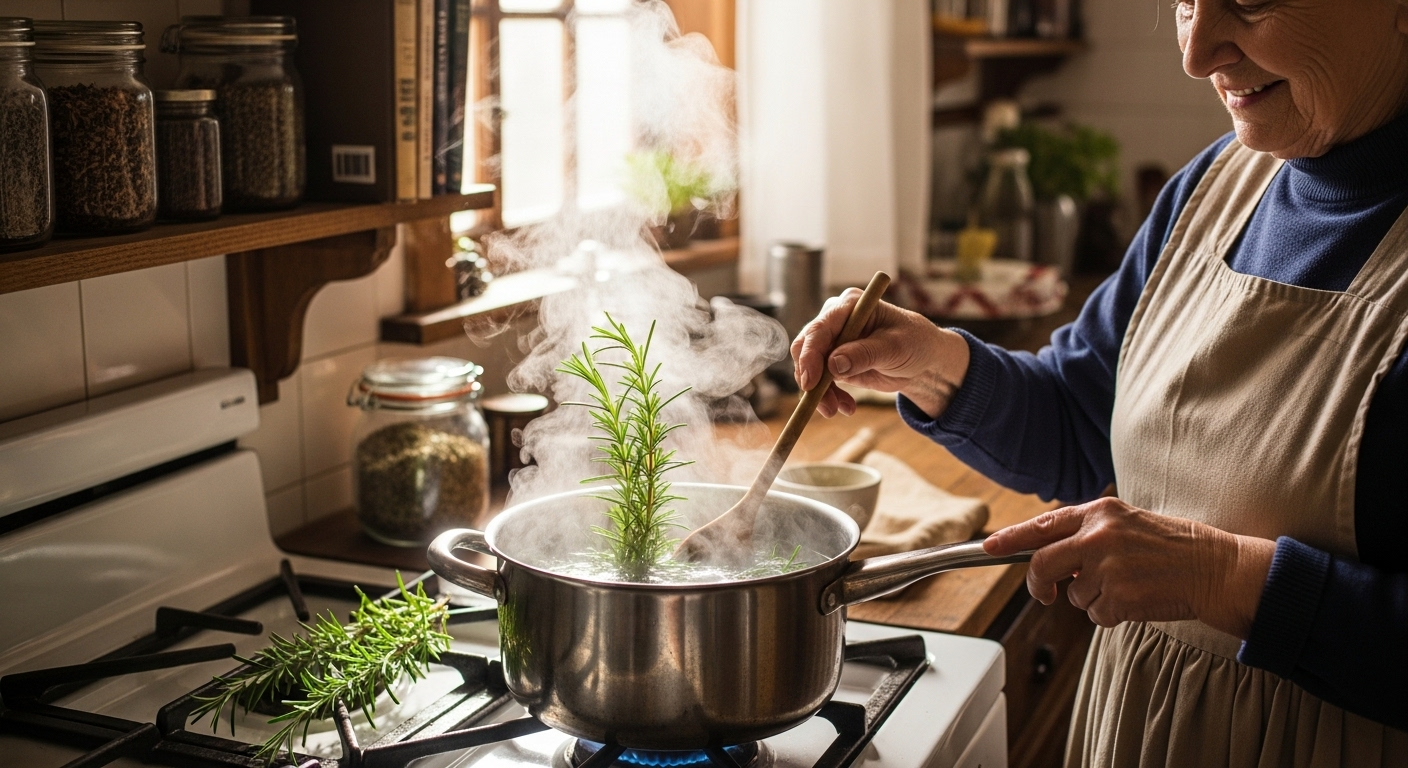
Her approach to rosemary was as straightforward as everything else she did. When the house felt heavy, whether from long winter days, too much cooking, a gathering that had run too long, or simply the particular staleness that settles into a closed-up home, she would step outside to the pot of rosemary growing by the back door and bring in a few sprigs. Water in a saucepan. Rosemary in the water. Heat turned low once it came to the boil. That was the whole ritual.
What it produced was not a fragrance so much as a transformation. The scent moved through the rooms without announcing itself aggressively. It did not compete with or overpower whatever else was present. It simply arrived, gradually, in every corner, and the mood of the house shifted to meet it. Tension that had been sitting invisibly in the air seemed to lose its grip. The space felt easier to be inside. Family and guests and even the dog, who had his own strong opinions about the household atmosphere, all seemed to settle.
I thought of it for years as simply one of those things that grandmothers know. It took considerably longer to understand that there was a real and documented reason behind why it worked.
What Rosemary Actually Does to the Air in Your Home
Rosemary contains natural aromatic compounds that are released when the herb is heated. These compounds do not function the way a commercial air freshener does, by masking existing smells with something stronger. They interact with the air in a more organic and grounded way, infusing it with something that genuinely alters how the space registers to the people inside it.
The scent profile of heated rosemary sits at an unusual and useful intersection. It is simultaneously invigorating and calming, herbal and clean, present without being insistent. It sharpens the senses enough to clear mental fog without tipping into stimulation. It softens a room without making it feel artificially sweetened. It is, in short, almost exactly what most homes need at the end of a long day and cannot get from anything that comes in a spray can.
There is also something in the ritual quality of the process itself that matters. You are not pressing a button or plugging something into a wall socket. You are standing in your kitchen, filling a pot with water, adding something that grew in the ground, and applying heat. The action takes perhaps two minutes and the result unfolds over the following half hour. That slowness is part of what makes it work, not just on the air but on the person doing it. It is a small, deliberate act of care for the space you live in, and that intention carries its own kind of weight.
How to Do It: The Full Method
The process could not be simpler, which is exactly why it has survived in family kitchens across generations without needing to be written down.
Start by choosing your rosemary. Fresh sprigs cut from a growing plant are ideal if you have access to them, and rosemary is one of the most forgiving plants to grow in a pot by a window or on a balcony in most Australian climates. Dried rosemary from your spice cupboard works equally well and produces essentially the same result. There are no precise measurements required here. A small handful of fresh sprigs or one to two tablespoons of dried herb is a reasonable starting point and you can adjust from there based on how strong you want the effect.
Fill a small to medium saucepan with water, roughly three to four cups. Add your rosemary. Bring the water to a gentle boil over medium heat, at which point you will notice the first traces of fragrance beginning to rise. Once it reaches the boil, reduce the heat and allow it to simmer. Twenty to forty-five minutes is a comfortable range depending on how thoroughly you want the scent to move through the house. Keep an eye on the water level and add more as needed so the pot does not run dry.
If you want the fragrance to travel further and faster, open internal doors between rooms and allow the steam to move naturally through the house. On a mild day, a window slightly open creates a gentle circulation that carries the scent further than still air would allow.
The pot can be reused across several days if you allow the rosemary and water to cool between uses, adding fresh water each time. The dried herbs continue to release fragrance through multiple simmer sessions before needing to be replaced.
How the Same Scent Changes Across Different Rooms
One of the things that surprised me when I began doing this regularly in my own home was how differently the rosemary seemed to register depending on where I was in the house. The scent does not change, but the space it moves into gives it a different character in each room.
In the kitchen it comes through as bright and clean, cutting through the lingering evidence of garlic or fried food or whatever the previous evening’s cooking left behind. It resets the room in a way that feels immediate and useful rather than decorative.
In the living room it softens as it mingles with the warmer, more settled air of a space built for relaxing. It becomes something more like a background note than a foreground one, the kind of scent that makes a room feel lived-in and cared-for without drawing attention to itself.
In a home office or study it does something that I can only describe as clarifying. The woodsy, slightly sharp quality of heated rosemary seems to help focus in the same way that cool air does, bringing the mind back to the present without demanding anything from it. Several people I have mentioned this to have started keeping a small pot of dried rosemary on their desk specifically for this reason.
In the bedroom the effect is subtler but genuinely present. Rosemary is not lavender and it will not send you to sleep, but a faint trace of it in the air of a bedroom creates a grounded, clean atmosphere that supports rest without the sweetness that some people find too heavy before sleep.
Combinations Worth Trying
My grandmother occasionally added other things to the pot depending on the season or the mood she was trying to create, and this is where the ritual becomes genuinely enjoyable to experiment with.
Rosemary on its own produces something clean, herbal, and versatile that works in any room at any time of day. It is the reliable everyday version and the one worth starting with.
Rosemary and lemon peel together create something brighter and more energising, sharper at the edges, particularly good in the morning or after cooking. The citrus note lifts the herbal base without overwhelming it.
Rosemary and cinnamon shift the whole mood toward warmth and comfort. This combination works beautifully on cooler evenings or in the lead-up to any gathering where you want the house to feel immediately welcoming to people walking in from outside.
Rosemary and orange peel is sweeter and more uplifting than the lemon version, very good for weekend mornings or when you are expecting guests and want the house to feel festive without using anything synthetic.
Rosemary and a bay leaf or two produces a deeper, more savoury result that sits particularly well in kitchens and dining spaces, especially during slow-cooking afternoons when the stove is already doing other work and the whole house already carries the suggestion of a good meal being prepared.
The proportions in all of these combinations are entirely flexible. Add more of what appeals to you and less of what does not. There is no version you can get wrong.
Why This Ritual Matters Beyond the Fragrance
In a domestic culture that has developed a strong preference for solutions that are instant, packaged, and guaranteed to produce a specific outcome, boiling rosemary offers something noticeably different. It is slow. It is unpackaged. The outcome varies slightly each time depending on the herb, the water, the weather, and the particular mood of the house on that particular day. None of that is a drawback. All of it is part of what makes it work.
The act of standing in your kitchen and making something happen through heat and water and a plant that grew in the ground is a small but genuine form of attention paid to the space you live in. It is different in kind from pressing a button on a diffuser, not because diffusers do not work, but because they ask nothing of you and therefore give nothing back except the fragrance itself. Boiling rosemary asks you to be present for the two minutes it takes to set it going, and that presence tends to extend into the rest of the time the pot is simmering.
My grandmother never described it in these terms. She would not have used words like intentionality or sensory environment. She would have said simply that when the house smells right, everything else is easier. Which is, when you reduce all the modern language about atmosphere and mindfulness and domestic wellbeing back to its essential truth, exactly correct.
The pot is small. The herb is inexpensive and easy to grow or buy. The method takes less time than almost any other thing you might do to change how your home feels. And the result, the slow movement of something warm and herbal and genuinely alive through the rooms of a house, is one of those rare things that works as well the hundredth time as it did the first.
My grandmother knew what she was doing. She almost always did.
Read More: For more home tips, lifestyle stories, and everyday wisdom written for Australian readers, visit wizemind.com.au