People Who Become Calmer as Life Gets More Chaotic Didn’t Learn It From Self-Help Books
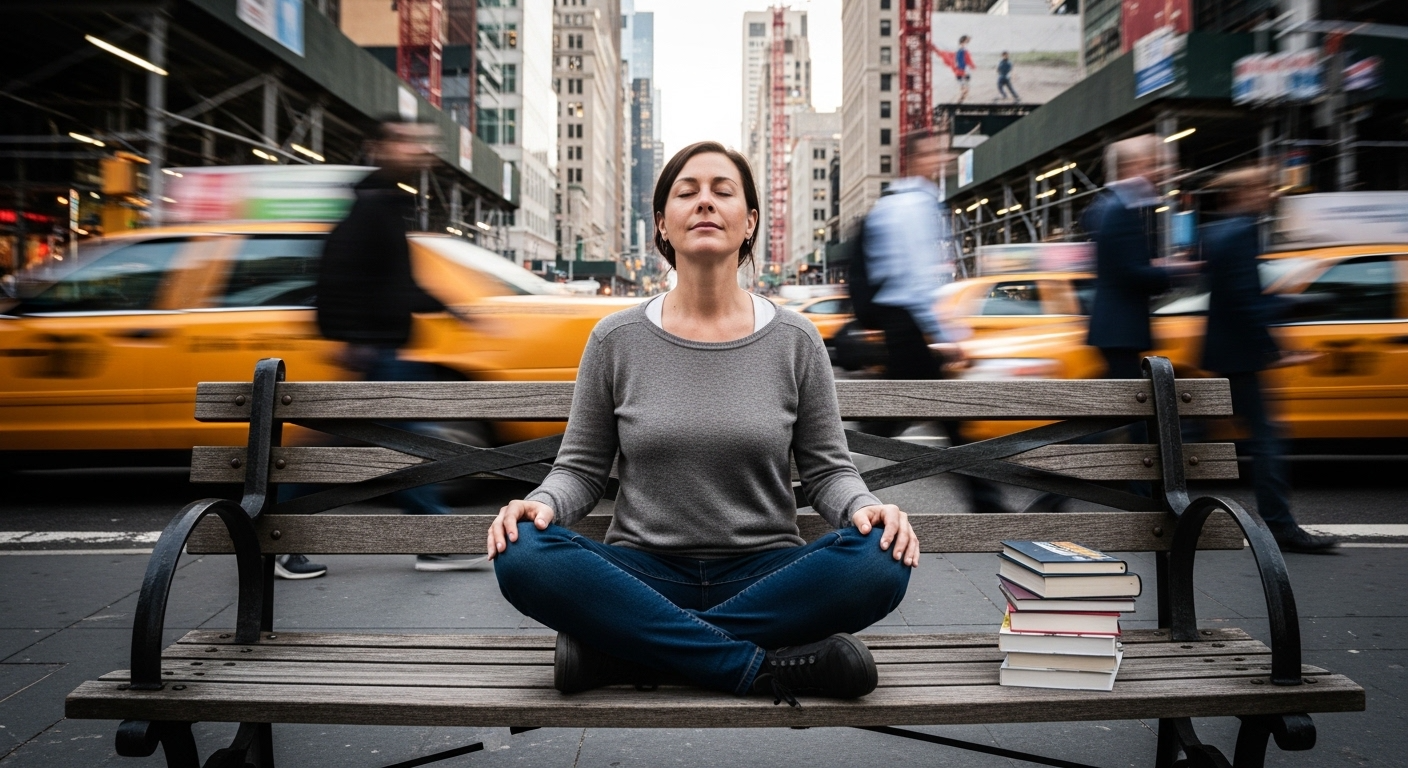
There is a particular kind of person you notice in a crisis. While everyone else raises their voice or freezes or reaches for their phone with shaking hands, this person gets quieter. More focused. Their movements slow slightly, their face settles, and they begin doing the next necessary thing with an unhurried precision that looks, from the outside, almost supernatural.
We tend to call this composure. We admire it. We wish we had more of it. And we almost always assume it is a personality trait, something the person was simply born with, a feature of their character the way eye colour is a feature of their face.
Research suggests we are wrong about where it comes from. The calmest people in a room are usually not the ones who were born calm. They are the ones who were forged into it, slowly and often painfully, by circumstances that did not give them the option of falling apart.
What the Nervous System Learns From Surviving
To understand why some people grow calmer as life grows harder, it helps to understand what repeated crisis actually does to the human nervous system at a biological level.
Psychologist Stephen Porges developed what is known as polyvagal theory, which maps how the autonomic nervous system responds to threat. In simplified terms, the nervous system moves through three states depending on what it perceives around it. Social engagement, a state of safety and connection. Fight or flight, the sympathetic activation that prepares the body for action. And shutdown, a deeper withdrawal when threat becomes overwhelming.
Most people cycle through these states in response to what life presents. A stressful meeting triggers mild fight or flight. A genuinely frightening experience produces a stronger response. And then, when the threat passes, the nervous system returns to baseline.
But for people who face repeated, unavoidable stress, particularly in childhood or early adulthood where escape is not possible, the baseline itself begins to shift. The nervous system learns a different lesson. Not that safety follows danger, but that composure is what keeps you functional when danger does not leave. Researchers describe the resulting state as tonic immobility with awareness, a condition in which the body’s instinct toward panic is overridden by a learned capacity to think clearly and act precisely under extreme pressure.
From the outside, this looks like extraordinary calm. From the inside, it often feels like blankness. Not peace, but the absence of the emotional noise the nervous system has learned to suppress because that noise was never useful and sometimes made things worse.
The Evidence Behind the Transformation
Columbia University psychologist George Bonanno has spent decades researching how people respond to trauma and adversity, and his findings challenge the popular assumption that significant hardship inevitably produces lasting psychological damage.
His research consistently shows that resilience following adversity is more common than prolonged distress. A substantial portion of people who experience serious trauma, loss, or repeated crisis go on to function well, and in some respects develop capacities that people without similar histories do not have. The nervous system learns from what it survives. Each crisis navigated without collapse teaches the body that collapse is survivable, and eventually that the collapse itself may not be necessary.
But Stanford psychologist James Gross adds a critical distinction that complicates this picture. His research differentiates between two emotional regulation strategies that can look similar from the outside but function very differently on the inside. Cognitive reappraisal involves genuinely reframing a situation, changing how it is understood rather than simply suppressing the response to it. Expressive suppression involves holding the emotional response inside while presenting a composed exterior.
The difference matters enormously. People who rely heavily on suppression may appear calm, but Gross’s research shows they experience lower wellbeing over time, weakened social connections, and higher physiological stress than their composed exterior suggests. The calm face is real. The cost behind it is also real.
The Hidden Price of Being the Steady One
The personal account behind much of this research captures something that clinical language alone cannot fully convey.
Consider the person who was always the steady one. The one people turned to in emergencies. The one who could manage a family crisis, navigate a professional disaster, or hold space for someone else’s grief, all while appearing perfectly composed. From the outside, this looked like strength. From the inside, it was something more complicated.
The composure was genuine. But it had been purchased at a specific cost. The same nervous system that learned to stay functional under pressure had also learned to suppress the emotional range that crisis does not require. Grief, anger, fear, even joy in its fullest form, these experiences require a kind of internal permission to feel that a survival-oriented nervous system does not easily grant. The person who cannot fall apart in a crisis often finds, later, that they cannot fall apart at all.
This shows up in therapy in a recognisable pattern. Clients who sit quietly and describe devastating events in their lives with calm, measured voices. Who then say, almost puzzled, that they do not understand why they are not more upset. They are not unfeeling. They are grieving something specific and difficult to name. The loss of access to their own emotional experience. The composure that protected them has become the wall between them and the full texture of their own lives.
Survival Composure Versus Cultivated Calm
There is a meaningful distinction between these two kinds of calm that is easy to miss because they can look identical from a distance.
Cultivated calm, the kind developed through deliberate practice, meditation, therapy, or genuine reflection, functions as a tool. It can be chosen when needed and set aside when it is not. The person who has cultivated calm can still access fear, grief, and vulnerability. They have expanded their capacity, not narrowed it.
Survival composure is different in nature. It is not a tool that gets picked up and put down. It is fused into identity. It operates automatically, a conditioned response to a lifetime of circumstances that trained the nervous system to equate steadiness with safety. The person does not choose to stay calm. Staying calm is simply what they do, regardless of whether the situation actually requires it.
This automatic quality is both the survival composure’s greatest strength and its most significant limitation. It produces reliable steadiness in genuine crisis. But it also produces that same steadiness when grief needs to be felt, when anger deserves expression, or when vulnerability would deepen a relationship in ways that matter. The nervous system does not distinguish between a crisis that requires composure and a moment that requires something else entirely.
The Long Road Back to Emotional Range
The recovery that becomes necessary for people whose composure was forged by survival is slow, and it does not happen through the same mechanisms that created the problem. Reading about emotional availability does not teach the nervous system that safety is real. Only experience does that.
The work involves something more difficult and more patient than acquiring a new skill. It involves teaching a nervous system that has been on alert for years, sometimes decades, that the original crisis is over. That composure no longer needs to be automatic. That vulnerability will not produce the consequences it once produced. That falling apart, in the right circumstances and with the right support, is not a failure of the survival system but an expression of a fuller life that the survival system was protecting.
This recalibration happens in therapy, in relationships where trust is genuinely established over time, and in the body itself through practices that allow physical experiences of safety to slowly update the nervous system’s stored predictions about what the world is like. It is painstaking work. But the people who do it often describe reaching emotional experiences they had lost access to for so long they had forgotten they were missing them.
What Composure Under Pressure Actually Tells Us
The next time you notice someone becoming calmer as a situation deteriorates around them, resist the temptation to assume they are simply built that way. The more likely story is that they were built into it, by circumstances that did not offer panic as a viable option, across enough repetitions that the nervous system eventually stopped offering it at all.
That is genuinely remarkable. The capacity to function clearly under conditions that overwhelm others is a real and significant human adaptation. It is also, in many cases, a survival mechanism that deserves acknowledgement as something that was earned under pressure, not simply possessed from birth.
And the bravest thing such a person can do, after years of being the one who held everything together, is not to face another crisis without flinching. It is to sit quietly in a moment that does not require composure and let themselves tremble anyway. To discover that the full range of what it means to feel is still available to them, waiting on the other side of the wall that kept them safe for so long.
That journey from survival composure to chosen calm, to emotional freedom, is not weakness. It is the hardest kind of courage there is.
Key Points
- Composure under pressure is most often learned, not inherited. Research supports the finding that the calmest people in crisis situations typically developed that capacity through repeated exposure to unavoidable stress, where panic was not a viable option and the nervous system gradually adapted to function effectively without it.
- The distinction between survival composure and cultivated calm matters enormously. Cultivated calm is a flexible tool that can be chosen and set aside. Survival composure is an automatic, identity-level response that operates regardless of whether the situation actually requires it, which makes it both a remarkable strength and a significant limitation.
- The hidden cost of being the steady one is reduced access to emotional range. Research by James Gross shows that people who rely on expressive suppression experience lower wellbeing and higher physiological stress despite their composed exterior. The calm that looks like strength on the outside can represent a significant loss of emotional availability on the inside.
- Recovery is possible but requires more than intention. The nervous system learns from experience, not from decisions, and recalibrating a survival-oriented nervous system requires sustained experiences of genuine safety rather than simply choosing to feel more. Therapy, trusted relationships, and body-based practices are the primary vehicles through which this recalibration occurs.
- The bravest act for a chronically calm person is allowing themselves to feel. For someone whose nervous system learned that composure was survival, choosing vulnerability in a moment that permits it represents a more difficult act of courage than maintaining steadiness under pressure ever did.
For more psychology, lifestyle, and human behaviour insights, visit wizemind.com.au