No More Foil Behind the Radiators: This Far Smarter Trick Warms a Room Much Faster
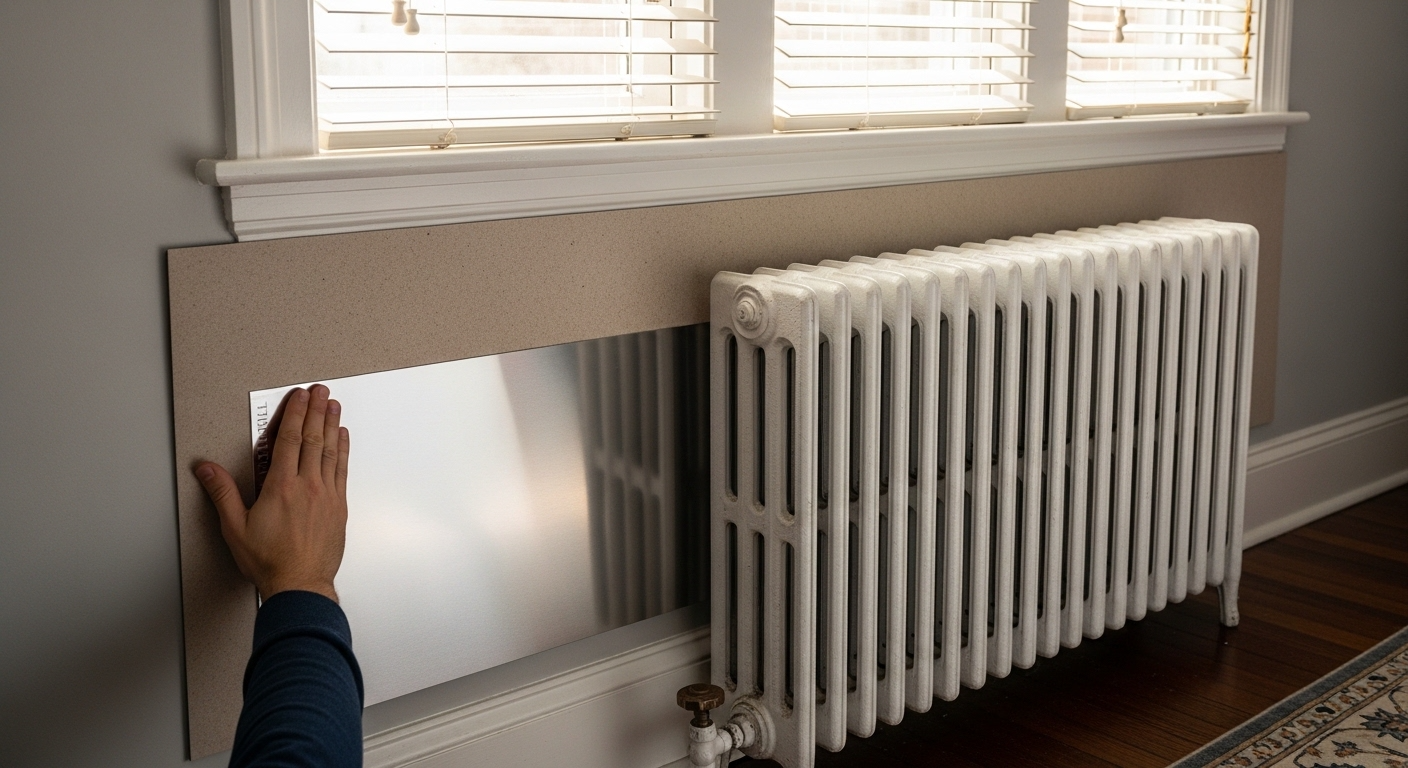
The radiator was clicking itself awake for the first cold evening of the year when I noticed the old foil had finally given up. It slumped behind the metal panels like a tired mirror, corners curling, edges torn, taped and re-taped so many times that the paint beneath it had a permanent scar. The room was still chilly, my breath a faint ghost in the air, and the whole setup suddenly felt a little foolish. Glinting foil, hopeful tape, and a stubborn draft that would not take the hint. There had to be something better.
No More Foil, No More Fiddling
For decades, the go-to hack has been simple. Slap some reflective foil behind the radiator and, so the thinking goes, you will bounce all that precious heat back into the room instead of letting it seep into the wall. It sounds clever. It looks like something your thrifty uncle would swear by. And in theory, in a very specific kind of house with very specific kind of walls, it can do something.
But here is the thing. In real modern homes, and even in many older ones, foil behind the radiator barely changes the way a room feels. You might save a tiny bit of heat lost into a badly insulated outside wall. Maybe. But warmth, the kind that makes you relax your shoulders and forget about your slippers, mostly does not come from what is happening behind the radiator. It comes from everything else that is happening in front of it.
Heat is not a still thing. It does not politely hover in front of a shiny panel waiting to be reflected. It moves. It rises, curls, escapes through glass, hides in cold corners, gets swallowed by bare floors and draughty gaps. That is where the real battle is being fought, often silently, while we keep fussing with foil.
So if not foil, then what? The answer is quieter, softer, and a lot more human than a crinkly sheet of insulation tape. It is about turning your room into a kind of gentle thermal nest. Stopping heat from bolting, and guiding it where you want it most.
The Smarter Trick: Build a Warm Shell, Not a Shiny Wall
Imagine your room not as a box with a heater, but as a landscape. There are warm valleys and cold shadows. The radiator is just one of many small suns. The trick is not to make that sun shine harder, but to stop its light from disappearing into empty space.
The smarter way to warm a room faster is to work with what your radiator is already doing, then quietly support it on every side. Instead of obsessing over what is behind the radiator, you focus on three simple ideas.
- Slow the escape of heat so the warmth your radiator generates stays in the room longer
- Guide the movement of warm air so it reaches the spaces where you actually sit and move
- Warm the surfaces that touch your skin and your senses so your body reads the room as comfortable at lower temperatures
Do this right, and the room does not just warm up on the thermostat. It warms up in your bones. You will nudge the air to circulate better, soothe the cold spots, and reduce the silent heat thieves. Glass, gaps, and bare surfaces.
It starts with noticing. Stand in your room the next time the radiators begin to hum. Feel where the cold lives. Is it the floor that bites at your ankles? The window that seems to breathe out a steady, invisible chill? The corner where the air always seems still and dull? Once you find those places, you have found where to work your magic.
1. Taming the Window: The Great Heat Escape
Stand near your window on a winter evening and you can almost feel the warmth being sucked out, especially if the radiator is under that window as many are. The hot air rises, brushes past the cold glass, and cools quickly, slumping back into the room as a soft, weary draught. Foil behind the radiator does not stand a chance against that constant pull.
The real trick is to turn your window from a heat thief into something closer to a thermal curtain wall. Heavy, lined curtains or thick blinds do more in ten minutes than foil will do all winter. When you draw them at dusk, you are not only blocking the night. You are trapping a layer of air between the glass and fabric, like a puffy, invisible duvet.
If you already have curtains but they hang just to the windowsill, they are doing only half the job. Full-length, floor-grazing curtains, especially with a dense lining, slow the cooling of the air that rises from the radiator and meets the glass. A simple, surprisingly effective tweak is to use a short curtain shelf or a wide windowsill board above the radiator, jutting out just enough to deflect the warm air toward the room instead of past the glass. No major DIY needed. A sturdy wooden board or a well-secured shelf can guide that rising stream of heat where you actually live.
2. The Radiator’s Breathing Space
Radiators work by moving air. Cold air slips in at the bottom, is warmed as it brushes the hot metal, then rises and rolls out across the room. When you cram a radiator behind a sofa, a heavy cabinet, or a barricade of laundry, you are essentially putting a hand over its mouth and asking it to breathe harder. It will not. It will just waste more energy trying.
One of the smartest ways to make a room warm faster is to let the radiator breathe properly and use a simple deflector to guide that breath. Not a shiny reflective panel behind it, but a subtle physical nudge in front or above it.
Consider a slim, purpose-made radiator shelf fixed just a little above the top. It does not block the heat. It catches the rising air and throws it gently out into the centre of the room. A well-vented radiator cover with large top vents and a gap at the floor can make the flow more organised and efficient, preventing that hot air from clinging sadly to the wall.
Even shifting a sofa forward by 10 to 15 centimetres can make a startling difference. The radiator no longer warms the back of the furniture as much. Instead, the air can snake upwards and around, reaching you where you sit. You may not see the difference, but you will feel it in the time it takes before you stop pulling your blanket tighter.
Think of it as choreography. The radiator is dancing with the air, and your furniture can either help or trip them up.
3. Warm from the Ground Up
A room never truly feels warm if the floor is cold. Your feet know long before the thermostat does. Heat likes to rise, which means, ironically, that the ground-level part of your room is where the battle for comfort is often lost.
If you have hard floors, wood, tile, or laminate, they are quietly draining warmth from your body through your socks with ruthless efficiency. A thick, dense rug placed strategically in the lived-in zone of the room does more than just feel nice. It slows heat loss into the floor, adds a layer of trapped air, and changes the way your body reads the whole room.
You might have noticed this already. The same air temperature feels very different in a room with a warm rug than in one with bare boards. That is because your skin and nerves are not just measuring air. They are constantly sampling the things they touch. Warm feet, warm mind. Warm chair, warm mood.
Pair that rug with a small tweak to your radiator settings, slightly lower in unused rooms and focused in the spaces where you spend evenings, and the room seems to warm more quickly even if the numbers stay modest. Your body responds to the comfort of contact surfaces faster than to a one-degree tweak on a wall controller.
4. Sealing the Whispers: Drafts and Gaps
Every house has whispers. The faint, persistent threads of air that slide under doors, around old window frames, through the letterbox or chimney. They rarely roar. They simply steal. A slow, constant removal of your carefully heated air, replaced by cold from somewhere else.
Here the smarter trick is not glamorous but feels almost magical once you do it. Find the leaks and muffle them.
- Draft excluders at the base of doors to stop cold air creeping in
- Brushed or covered letterboxes to block the constant cold exchange
- A removable chimney balloon or simple damper for unused fireplaces that act as open chimneys
- Foam or rubber seals around old, skeletal window frames where gaps let warmth escape
- Thick door curtains in hallways where the front door creates a cold funnel into the house
When the drafts are tamed, something subtle happens. The air in the room no longer flows in sharp, sneaky currents. Instead, the warmth from your radiator can circulate more predictably, more slowly, swirling instead of sprinting. That alone can shave minutes off the time it takes for you to feel the relief of a warm room after coming in from outside.
5. Surfaces That Glow, Not Just Air That Warms
People often talk about warming the room, but our bodies read warmth in more than just air temperature. Radiant heat, the gentle warmth you feel from a sunlit wall or a thick sun-warmed curtain, is deeply comforting in a way that thermostat numbers cannot fully capture.
Look around your room. Are the walls a cold pale grey or stark white with little on them? Do you have large, bare areas that never seem to shed warmth back toward you? Adding thick textiles, tapestries, upholstered headboards, layered throws, and densely filled bookcases turns flat cold surfaces into soft reservoirs of heat. They absorb warmth when the radiator runs and release it slowly when it pauses.
Over an evening, the result is a kind of gentle afterglow. The radiator clicks off, but the room does not plunge back into neutral. Cushions, rugs, curtains, and wall hangings keep whispering out their stored warmth for a while longer, extending the comfort of each heating cycle without asking anything more of the boiler.
A Quick Comparison: Foil vs a Warm Shell
| Approach | What It Does | Effect on Room Warmth |
|---|---|---|
| Foil behind radiator | Reflects a little radiant heat away from an external wall | Often barely noticeable in lived-in rooms |
| Thick curtains or blinds closed at dusk | Reduces heat loss through windows, creates insulating air layer | Room loses warmth more slowly, feels cosy sooner |
| Radiator shelf or clear space above | Guides warm air out into room, improves circulation | Faster spread of warmth where you sit and move |
| Rugs and soft furnishings | Reduce heat loss to floors and cold surfaces | Room feels warm at lower thermostat settings |
| Sealing drafts | Prevents cold air creeping in and warm air escaping | Warmth builds faster and lasts longer |
Putting It All Together: The Evening Test
Picture an ordinary winter evening. You come home, fingers stiff from the cold. Instead of turning the thermostat far higher and waiting restlessly, you have already set the stage.
The curtains are drawn as the light fades, thick folds cloaking the glass. The radiator under the window breathes easily, a small shelf nudging its warmth gently toward the middle of the room. The sofa sits just far enough away that heat can rise and swirl around you. A deep rug cushions your feet, and the door behind you closes with a soft thud against a padded draft excluder.
You turn the heating on. For a few minutes, nothing dramatic happens. Then the air starts to shift. The faintest sway of warmth from the radiator, bouncing off the rug, the walls, the heavy fabric at the window. The room does not just get less cold. It gains a character. The slightly drowsy feeling of air that intends to stay put, to settle around you rather than leak away.
You notice you are comfortable sooner than you expected, without cranking things up to tropical levels. The foil you once battled with, creases, tape, and all, feels like an old superstition. Charming, maybe. But you have found something better. Not a hack, but a quiet understanding of how warmth actually moves through a room, and how to keep it close.
Frequently Asked Questions
Does foil behind radiators ever make sense? It can help slightly if the radiator is on an uninsulated external wall and you use a proper insulated reflective panel rather than kitchen foil. But the improvement in comfort is usually small compared to addressing windows, drafts, and furniture placement. For most homes, the effort is not proportionate to the result.
What is the single biggest change I can make for faster-feeling warmth? In most living rooms, thick lined curtains or blinds over large windows make the most noticeable difference, especially when paired with closing them at dusk and keeping the radiator free to circulate air. This one change alone tends to transform how quickly a room becomes comfortable on a cold evening.
Will a radiator cover make my room colder? A badly designed cover with small vents can trap heat and reduce efficiency. A good cover with large openings at the top and bottom can actually guide airflow and distribute warmth more evenly, sometimes improving how the room feels. The design of the cover matters far more than whether you use one at all.
Is it better to keep doors open or closed when heating? If you want one room to warm quickly, keeping its door closed helps contain the heat and block drafts. For quick focused cosiness, a closed door almost always wins. If your heating system is well balanced and you want even temperatures throughout the house, partially open doors can help distribute warmth across rooms.
How much can I reduce my thermostat using these tricks? Many people find they can reduce their thermostat by one to two degrees without feeling any colder when they improve curtains, rugs, and draft-proofing. The key sign that it is working is this. You feel comfortable at a lower number than before, which over a heating season translates into meaningful energy and cost savings without any sacrifice of warmth.
Key Points
- Foil behind radiators addresses the wrong problem. The primary source of heat loss in most rooms is not the wall behind the radiator. It is windows, drafts, cold floors, and furniture blocking air circulation. Fixing those issues delivers warmth that is felt in the body, not just measured on a thermostat.
- Curtains are the most impactful single change most rooms can make. Heavy, lined, floor-length curtains drawn at dusk trap a layer of insulating air against the glass, dramatically slowing the rate at which heat escapes through windows. This is especially significant when the radiator sits directly beneath the window, which is the most common layout in British and Australian homes.
- Radiators need breathing room to work efficiently. Furniture pushed against a radiator does not get warmer. It gets in the way. Moving a sofa forward by even ten to fifteen centimetres and adding a shelf above the radiator to deflect rising warm air into the room rather than up the wall are low-cost changes with immediate, noticeable effects.
- Warm floors change how the whole room feels. Because the body reads warmth through contact as much as through air temperature, a thick rug in the lived-in zone of the room can make the space feel warmer at a lower thermostat setting. Cold bare floors effectively cancel out much of the comfort the radiator is working to provide.