7 Things That Introverts Find Enjoyable That Extroverts Don’t, According to Psychology
Have you ever wondered why some people genuinely look forward to a quiet Friday night alone while others find the idea almost unbearable? Or why certain people light up during a deep two-hour conversation but seem to fade at a party full of small talk? The answer is not about shyness or social awkwardness. It goes much deeper than that, right down to how the brain is wired to seek and experience pleasure.
Psychology has recognized for decades that introverts and extroverts do not simply socialize differently. They experience enjoyment differently. Activities that genuinely restore and satisfy an introvert can leave an extrovert feeling restless, understimulated, or even anxious. Neither experience is wrong. They simply reflect different neurological realities.
Here are seven things that introverts genuinely enjoy that most extroverts find difficult to understand.
1. Deep One-on-One Conversations Over Small Talk
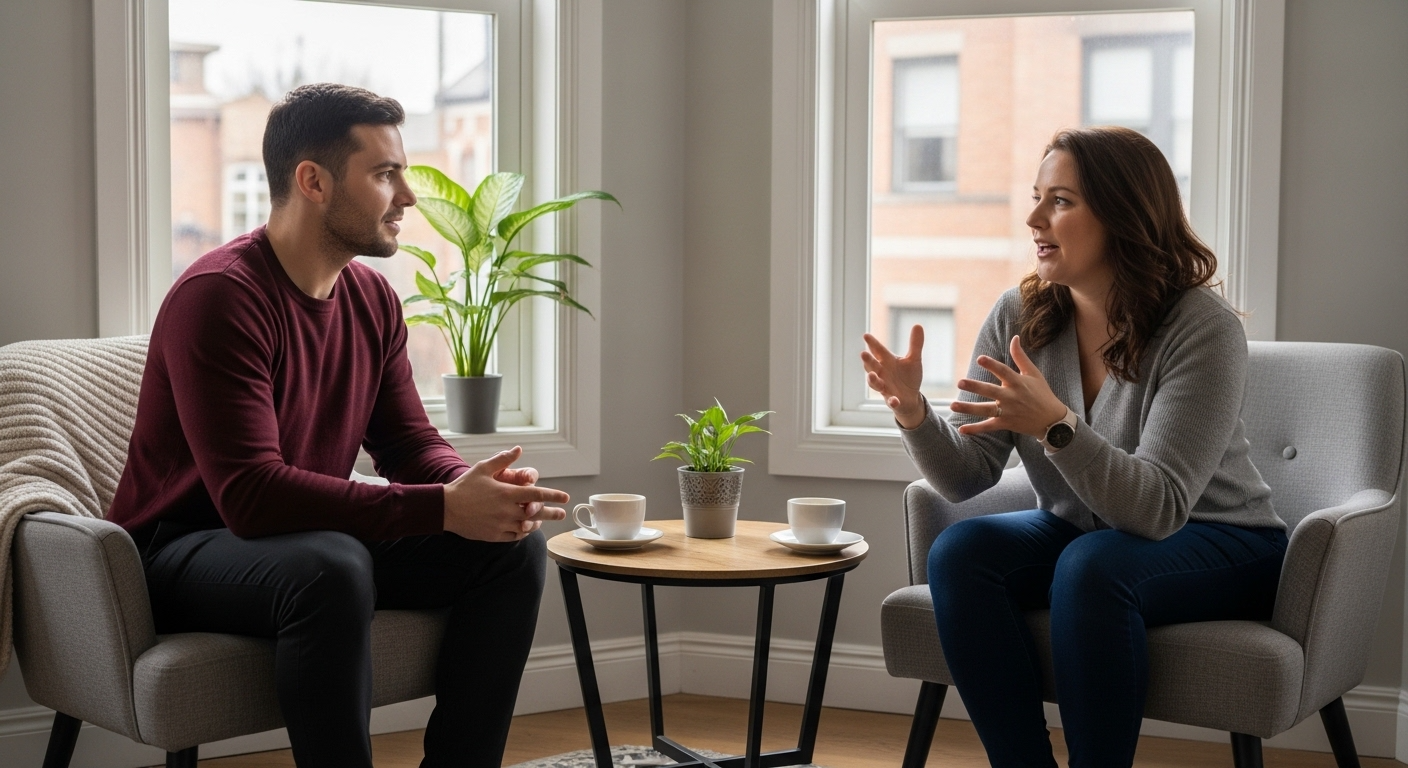
Ask an introvert what kind of social interaction they actually enjoy and the answer is rarely cocktail party banter. What energizes them is something more specific: a genuine, unhurried conversation that goes somewhere real. Discussing ideas, exploring a complicated topic, sharing something honest about their lives. A two-hour conversation that covers real ground feels far more satisfying to an introvert than three hours of surface-level socializing.
The brain chemistry behind this is measurable. When introverts engage in substantive dialogue, there is increased activation in regions associated with internal processing and long-term memory. The brain is receiving exactly the kind of stimulation it is built to respond to. Small talk, by contrast, creates social connection without that depth, which feels like a lot of effort for a small reward.
Extroverts often genuinely enjoy the lightness and variety of casual social navigation. For them, moving through multiple conversations at a gathering feels energizing rather than hollow. Neither preference is superior. They are simply different routes to feeling connected.
2. Solitude as a Form of Real Restoration
For an extrovert, an empty Saturday afternoon with nothing planned and no one to see can start to feel isolating within an hour. For an introvert, that same afternoon is something they may have been quietly looking forward to all week.
This is one of the most misunderstood differences between the two personality types. Introverts do not spend time alone because they cannot find social opportunities or because something is wrong. They spend time alone because it is how their nervous system recovers from the stimulation of everyday life.
Neuroscience explains this through differences in dopamine sensitivity. Introverts are more sensitive to dopamine, meaning they reach overstimulation more quickly in high-energy environments. Quiet time allows their nervous systems to return to a comfortable baseline. For extroverts, who need higher levels of stimulation to feel satisfied, that same quiet environment activates a kind of restlessness rather than calm.
An introvert might spend a Saturday afternoon reading, journaling, or simply sitting in a comfortable room without screens or conversation and genuinely feel replenished afterward. The solitude is not a compromise. It is the actual preference.
3. Developing Deep Expertise in a Single Area
Introverts frequently describe the experience of losing themselves in a subject or skill as one of the most satisfying things they do. Whether it is learning an obscure programming language, mastering a musical instrument, studying a specific period of history, or perfecting a craft technique, the combination of sustained focus and gradual mastery is genuinely pleasurable to them in a way that casual dabbling is not.
Extroverts tend to prefer hobbies that involve social components or varied new experiences. They might enjoy group fitness classes, team sports, or exploring new restaurants with different people each week. The variety and the social element matter more to them than becoming an expert in any one domain.
This distinction reflects how each personality type’s brain seeks stimulation. Introverts find deep and focused engagement rewarding in itself. The gradual improvement, the ability to explore subtleties, the quiet satisfaction of getting noticeably better at something over time: none of this feels boring or repetitive to them. It feels exactly right.
| Activity Type | Introvert Appeal | Extrovert Appeal |
|---|---|---|
| Hobbies | Deep expertise, solo practice, mastery-focused | Variety, social participation, new experiences |
| Learning | Self-paced study, individual research, specialization | Group classes, discussion-based, interactive |
| Recreation | Solo pursuits, low-pressure, predictable settings | New experiences, group activities, spontaneous plans |
| Professional growth | Written work, independent projects, focused expertise | Networking, collaborative teams, leadership roles |
4. Observing Social Situations Without Actively Participating
One of the most distinctive and least understood pleasures for introverts is what researchers sometimes call anthropological observation. At a party or gathering, an introvert may position themselves toward the edge of the room and spend a significant amount of time simply watching. Noticing group dynamics, reading the unspoken signals between people, understanding the social patterns unfolding in front of them. And genuinely enjoying it.
This is not sadness or social anxiety. It is a different and legitimate form of engagement with a social environment. Extroverts typically find this mode of participation unfulfilling because direct engagement is what energizes them, not observation of it. For an introvert, the observation itself is interesting and satisfying.
Research has found that introverts often develop superior abilities in reading nonverbal communication, understanding group dynamics, and picking up on subtle emotional shifts. These skills develop partly because they naturally spend more time watching than doing in social situations. The observation is not the absence of engagement. It is its own form of it.
5. Getting Absorbed in Reading and Long-Form Content
Introverts report a particular quality of pleasure from reading that is difficult to translate to someone who does not experience it: the feeling of being completely inside a world, a character, or a set of ideas for hours at a time without any external input or interruption. The immersion is not a side effect of reading. It is the entire point.
Many extroverts find solitary reading difficult to sustain. They prefer to discuss what they are reading with others, attend book clubs, or consume media in group settings where reactions can be shared in real time. The experience matters less to them than the social interaction built around it.
The introvert’s brain gets something specific from narrative absorption: sustained focus, minimal external stimulation, and the opportunity to process complex ideas privately and at their own pace. An introvert who spends a weekend reading a novel they love has not wasted two days. They have done exactly what restores them.
6. Planning and Preparing Before Social Events
This one surprises many people. While extroverts often thrive on spontaneity and discover what they think and feel by diving into situations directly, introverts frequently enjoy the planning stage of social events as a distinct activity in itself.
Thinking through what they will wear, mentally preparing a few conversation topics, researching the venue, or simply picturing how the event might unfold: for an introvert, this is not anxiety or overthinking. It is constructive engagement with an upcoming experience that helps them feel prepared and confident when they arrive.
When introverts walk into a social situation with some mental preparation done, they feel more settled and more able to actually enjoy themselves. The planning reduces the cognitive load of the event itself by handling some of the uncertainty in advance. For an extrovert, this same preparation would feel tedious because they expect to enjoy figuring it out in the moment.
Both approaches reflect completely different but equally valid strategies for managing social energy. The introvert prepares to conserve energy. The extrovert improvises to generate it.
7. Writing as a Primary Form of Expression and Connection
Many introverts describe written communication as the medium where they feel most fully themselves. Whether through emails, journaling, creative writing, or long-form online communication, writing provides something that spoken conversation often cannot: the time to let a thought fully form before it is expressed.
In conversation, there is pressure to respond quickly. The pace of spoken exchange does not always allow for the kind of internal processing that introverts do naturally before speaking. Writing removes that pressure. It allows for reflection, for editing, for finding exactly the right words to express something complex or nuanced. The control over the communication process feels genuinely satisfying rather than merely convenient.
Many introverts report that they express things in writing that they could not quite manage to say aloud, not because the thoughts are not there, but because writing gives them the processing time they need for those thoughts to arrive in a form they are ready to share.
This explains why many introverts naturally gravitate toward careers in writing, research, programming, and other fields where written communication is central. They are not just tolerating a work style. They are working in a medium that matches how their minds naturally function.
The Neurological Reality Behind These Differences
The differences between introvert and extrovert enjoyment are not matters of attitude or habit that could simply be changed with effort. They are rooted in measurable differences in how the brain processes stimulation.
Brain imaging studies show that introverts typically have more baseline activity in the prefrontal cortex, the region associated with internal processing, planning, and reflection. Extroverts show more activity in areas associated with immediate sensory experience and response to external stimulus.
The difference in dopamine processing is also significant. Because introverts reach overstimulation more quickly, high-energy environments have diminishing returns far sooner for them than for extroverts. Quiet and focused activities allow their nervous systems to function at their natural optimal level. This is not a limitation. It is simply how their neurology works.
Frequently Asked Questions
Is introversion the same as social anxiety?
No. Introversion is a personality trait related to how a person processes stimulation and where they gain energy. Social anxiety is a mental health condition involving fear of social situations. Introverts can be socially confident and capable. People with social anxiety can be extroverted. The two are entirely separate things.
Can introverts enjoy large social gatherings?
Yes. Many introverts enjoy parties and group events, particularly when they are well-prepared and can find smaller conversations within the larger setting. They may simply need more recovery time afterward, which is a neurological reality rather than a sign that something went wrong.
Is it unhealthy for introverts to spend a lot of time alone?
Not inherently. Adequate solitude is genuinely restorative for introverts in the same way that social interaction is restorative for extroverts. Healthy introversion includes having meaningful relationships and some social connection. The amount and type of social interaction that feels right varies by individual.
Can someone be both introverted and extroverted?
Yes. Many people are ambiverts, sitting somewhere in the middle of the introvert-extrovert spectrum rather than at either extreme. Most people have some capacity for both modes, with a natural preference for one direction.
Why do introverts seem to think so much before speaking?
Introverts typically process internally before expressing themselves externally. They often consider multiple angles before sharing an idea. This is not overthinking in a problematic sense. It is simply their natural cognitive style, and it often results in more considered and precisely expressed communication when they do speak.
What is the best way to support an introvert in your life?
Respect their need for downtime without interpreting it as unfriendliness. Value their written communication as a genuine form of connection. Understand that declining a social invitation is not a personal rejection. And recognize that their quieter, more internal way of engaging with the world is just as rich and valid as a more outwardly expressive approach.