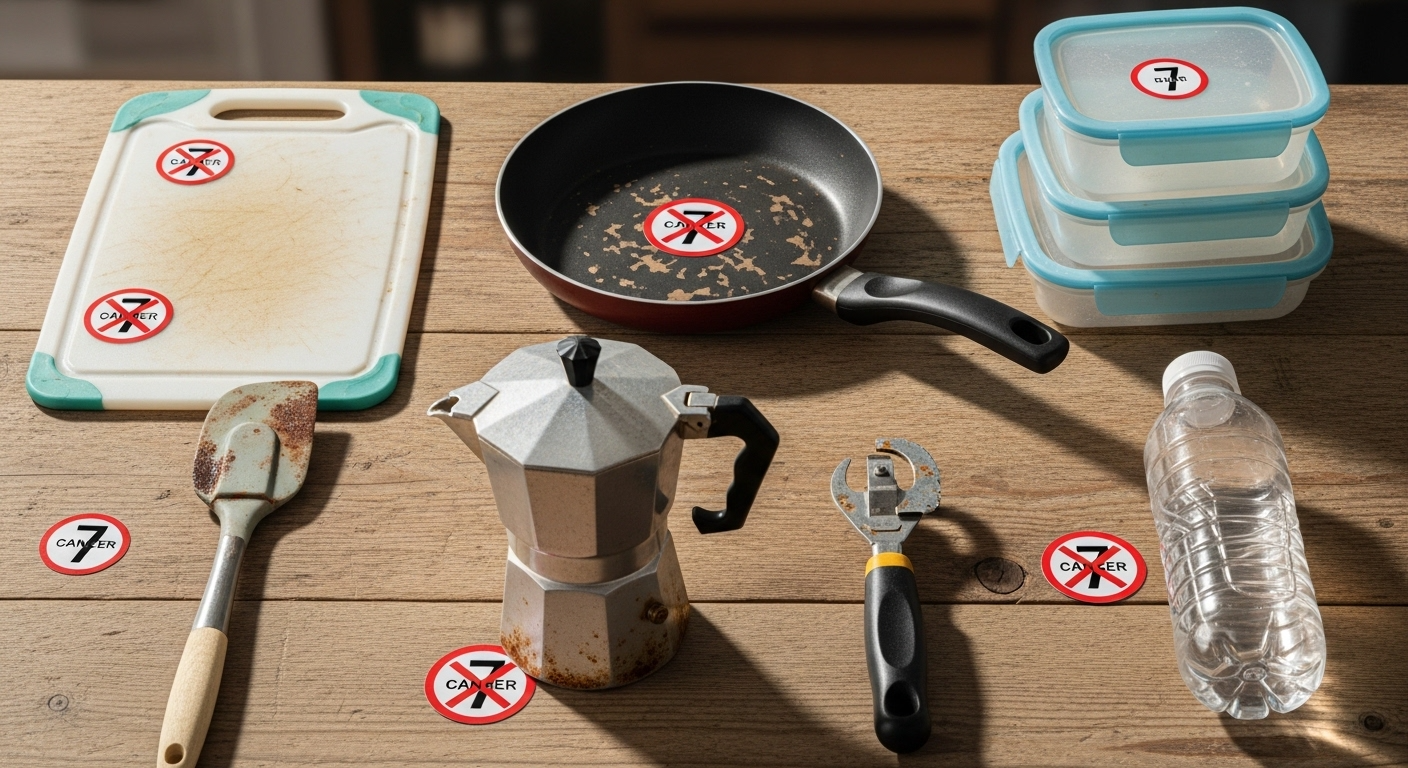
7 Cancer-Linked Kitchen Utensils to Consider Replacing
The kitchen is where we nourish ourselves and the people we care about, which makes it worth paying attention to what the tools we use every day are actually made from. Research over the past two decades has raised legitimate questions about certain materials found in common kitchen items, and while the science is not always as dramatic as headlines suggest, there are practical and well-supported reasons to make some straightforward swaps. Here is an honest look at seven categories of kitchen equipment that warrant reconsideration, along with the evidence behind the concern and the alternatives worth considering.
1. Scratched or Worn Non-Stick Cookware
Non-stick pans revolutionised home cooking, but the chemical story behind the coating has become considerably more complicated over time. Traditional non-stick coatings were manufactured using perfluorooctanoic acid, known as PFOA, a compound classified as a possible human carcinogen by international health agencies and linked in occupational exposure studies to kidney and testicular cancer. PFOA has been phased out of manufacturing in most countries including Australia, but older pans purchased before this transition may still contain it.
The more current concern relates to what replaced PFOA. The broader class of chemicals known as PFAS, or per- and polyfluoroalkyl substances, are still used in many non-stick products and have attracted increasing regulatory scrutiny globally. The risk from non-stick cookware is most significant when pans are scratched, used at very high heat, or significantly worn, as this accelerates any release of coating particles or chemical breakdown products.
If your non-stick pan is showing scratches, peeling, or significant wear, replacing it is a reasonable precaution. Cast iron, stainless steel, and ceramic alternatives perform well for most cooking purposes and carry none of the same chemical concerns.
2. Plastic Food Containers Not Labelled BPA-Free
Bisphenol A, or BPA, is a synthetic compound used to harden certain plastics and is found in many food storage containers, particularly older ones. It is classified as an endocrine-disrupting chemical, meaning it can interfere with hormone signalling in the body. Research has linked BPA exposure to increased risk of certain hormone-sensitive cancers including breast and prostate cancer, as well as developmental effects.
The migration of BPA from plastic into food is significantly accelerated by heat. Microwaving food in plastic containers, putting them through hot dishwasher cycles, or storing acidic foods in them all increase the likelihood of BPA leaching. Repeated use and visible wear also increase migration risk.
Many manufacturers now produce BPA-free plastics, though some researchers have raised questions about whether BPA substitutes carry their own risks. The most straightforward solution is switching to glass or stainless steel containers for food storage, particularly for anything intended to be heated or stored long-term. The upfront cost is higher but the containers last considerably longer and carry none of the same concerns.
3. Heavily Scored or Damaged Wooden Cutting Boards
The concern with wooden cutting boards is not the wood itself, which is a safe and traditional material, but rather what accumulates in the cracks, cuts, and crevices that develop with heavy use. Deep scoring in a cutting board can harbour bacteria that standard cleaning does not reach, and certain organic compounds including polycyclic aromatic hydrocarbons can accumulate in heavily damaged boards over time. PAHs are established carcinogens associated with long-term dietary exposure.
A wooden cutting board in good condition, regularly cleaned and maintained, is not a meaningful health risk. The issue is specifically boards that have been used heavily over many years without replacement and have developed deep scoring throughout the surface. If your board has visible deep grooves running across the cutting area, replacing it is sensible.
Well-maintained wooden boards can also be lightly sanded to refresh the surface. Bamboo boards, which are harder and develop fewer deep cuts, are a practical alternative. High-quality plastic cutting boards can be run through the dishwasher for more thorough sanitisation between uses.
4. Cheap Plastic Cooking Utensils Used at High Heat
Plastic spatulas, spoons, and other cooking utensils often contain phthalates, a group of plasticising chemicals added to make plastics more flexible. Phthalates are classified as endocrine disruptors and some have been associated with increased cancer risk in research studies. Like BPA, their primary route of concern in a kitchen context is migration into food, which is accelerated significantly by heat.
Using plastic utensils for low-temperature tasks such as mixing a salad or serving cold food carries minimal risk. The concern is specifically using cheap plastic utensils for stirring hot food on the stove, serving from very hot dishes, or leaving them resting in a hot pan. At high temperatures, the plastic can begin to break down and release compounds into the food being prepared.
Stainless steel, silicone rated for high-temperature use, and wooden utensils are all safe and effective alternatives. Quality stainless steel utensils in particular last essentially indefinitely and represent a straightforward one-time investment.
5. Older Teflon-Coated Bakeware Showing Wear
The same concerns that apply to scratched non-stick cookware apply to Teflon-coated baking trays, muffin tins, and cake pans, particularly older items manufactured before the PFOA phase-out and any items showing significant coating deterioration. At the temperatures used in baking, particularly in a hot oven, coating breakdown is accelerated compared to stovetop use.
Items with visible flaking, peeling, or bubbling of the non-stick surface should be replaced. As alternatives, uncoated stainless steel bakeware, cast iron, and silicone baking mats all perform well across a range of baking applications. Parchment paper used as a liner on standard baking trays is an inexpensive and effective way to achieve easy release without relying on chemical coatings.
6. Aluminium Foil Used with Acidic or Spiced Foods at High Heat
Aluminium foil is deeply embedded in Australian kitchen habits and for most uses the risk it presents is minimal. However, research has shown that aluminium migration into food is measurably higher when foil is used with acidic foods such as tomatoes, citrus, or vinegar-based marinades, or when combined with spices like cumin and turmeric, particularly at high cooking temperatures. Elevated aluminium intake has been investigated in relation to neurological conditions and some research has raised questions about associations with certain cancers, though the evidence remains less conclusive than for some other compounds on this list.
The practical guidance from food safety researchers is not to eliminate aluminium foil entirely but to avoid wrapping acidic or heavily spiced foods in it for cooking or extended storage. Parchment paper is a straightforward substitute for most oven cooking applications. Glass containers with lids work well for storage of acidic foods in place of foil-covered dishes.
7. Older Plastic Wrap Used on Hot or Acidic Foods
Plastic cling wrap often contains phthalates or other plasticisers that can migrate into food, particularly when the wrap is in direct contact with hot food or acidic ingredients. The concern is most significant when plastic wrap is used to cover dishes going into the microwave, placed directly over hot food, or used in contact with fatty or acidic foods over extended periods.
The safer approach is to allow hot food to cool slightly before covering, to ensure plastic wrap does not touch the food surface directly in the microwave, and to use silicone stretch lids, glass storage containers with lids, or beeswax wraps as alternatives for general food storage. These options are reusable, increasingly affordable, and carry none of the same chemical migration concerns.
Making Practical Changes Without Unnecessary Alarm
The evidence behind these concerns sits on a spectrum. For PFOA in older non-stick coatings and BPA in plastics, the research is relatively robust and the regulatory response has been significant. For aluminium foil and plastic wrap in typical use, the risk is considerably more context-dependent and lower in absolute terms.
The most important principle is proportionality. You do not need to replace every item in your kitchen immediately or treat cooking as an exercise in anxiety management. Starting with the most worn and damaged items, particularly any scratched non-stick cookware or very old plastic containers, addresses the highest-risk situations first. From there, making gradual replacements toward stainless steel, glass, cast iron, and ceramic materials when items need replacing anyway is a sensible long-term approach that improves your kitchen without requiring significant upfront expenditure.
When buying new kitchen equipment, looking for items labelled PFOA-free, PFAS-free, and BPA-free, or choosing materials that bypass these concerns entirely, makes the replacement process straightforward. The goal is a kitchen that genuinely serves the people cooking in it, which means being informed about what the tools are made from and making reasonable choices accordingly.
Read More: For more health, lifestyle, and practical home advice written for Australian readers, visit wizemind.com.au